

Close Menu
    Facebook X (Twitter) Instagram
    Trending
    • Got a P0005 Code? Here’s Why Your Car is Stalling (And How to Fix It)
    • P0004 code: Symptoms, Causes, and How to Fix It
    • p0003 code: How to Diagnose & Fix Fuel Volume Regulator
    • P0002 CODE: Causes, Symptoms, and Expert Fix Guide
    • What is P0700 Code and how to fix it?
    • How to Negotiate Car Price: 2025 Expert Guide to Save Big
    • Skoda Konfigurator 2025 – Build Your Perfect Škoda Online
    • Volkswagen Configurator: The Ultimate 2025 Guide to Building Your Perfect VW
    Facebook X (Twitter) LinkedIn Pinterest RSS
    SMARTMAG
    Leaderboard Ad
    • Home
    • Car Knowledge Center
    • Car Prices & Buying
    • Car Problems & Fixes
    • OBD-II Codes & Diagnostics
    SMARTMAG
    You are at:Car Knowledge Center » What is a Car? – The Ultimate 2025 Guide to Automobiles & How They Work
    what is a car 2025
    what is a car 2025

    What is a Car? – The Ultimate 2025 Guide to Automobiles & How They Work

    0
    By CarAutomobileHub Team on June 16, 2025 Car Knowledge Center

    In today’s high-speed world, where cars dominate roads, shape cities, and empower lives, one fundamental question often goes unasked: What is a car? This guide will break down everything you need to know—from basic definitions and history to how cars work, their types, components, and their evolving role in society. Whether you’re a student, car enthusiast, or just curious, buckle up. This is the definitive 2025 car guide you’ve been searching for.


    What's Inside This Page
    Toggle
    • Definition and Origin of the Word “Car”
    • The Purpose and Significance of Cars
    • The Main Parts of a Car Explained
      • 1. Engine (Combustion or Electric)
      • 2. Transmission
      • 3. Chassis and Frame
      • 4. Suspension System
      • 5. Steering and Brakes
      • 6. Interior Features
    • How Does a Car Work? (Simplified for 2025)
      • For Combustion Cars
      • For Electric Vehicles (EVs)
    • Different Types of Cars (2025 Overview)
    • A Brief History of Cars
    • Benefits of Cars
    • Challenges and Environmental Concerns
    • Cars in the 21st Century Culture and Society
    • The Future of Cars (2025 and Beyond)
      • 1. Self-Driving Cars
      • 2. Green Vehicles
      • 3. Smart Integration
    • Internal & External Links

    Definition and Origin of the Word “Car”

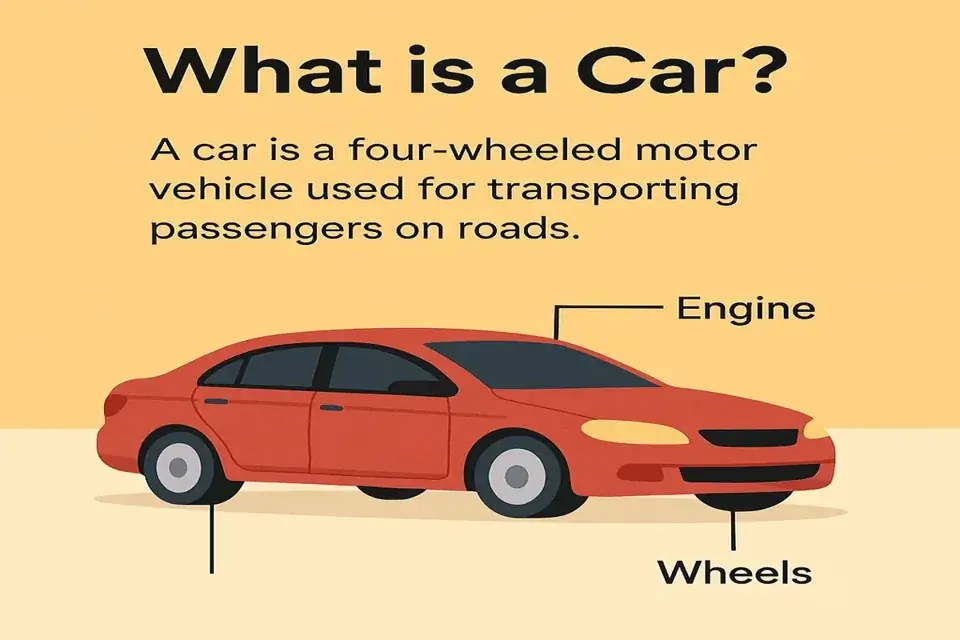
    The word car originates from the Latin “carrus” or “carrum”, meaning a wheeled vehicle. Over centuries, this term evolved to define motorized transport designed for roads and capable of independent movement. Today, a car is technically defined as:

    “A four-wheeled motor vehicle primarily designed for passenger transportation, powered by an internal combustion engine or electric motor, and capable of operating on roads.”

    This simple yet powerful definition opens the door to one of the most transformative technologies in human history.


    The Purpose and Significance of Cars

    Cars are not just about movement—they’re about freedom, control, and autonomy. They allow individuals to travel on demand, connect communities, expand businesses, and fuel economies. A world without cars would be a world restricted by distance.

    Cars serve several purposes:

    • Personal transportation
    • Family travel
    • Commercial use
    • Emergency response
    • Leisure and travel

    In short, the car is one of modern society’s most versatile and indispensable tools.


    The Main Parts of a Car Explained

    A car is a complex system of integrated parts, each performing a vital role:

    1. Engine (Combustion or Electric)

    The car’s powerhouse. Combustion engines rely on fuel ignition, while electric cars use motors powered by batteries.

    2. Transmission

    This controls how power from the engine reaches the wheels. It can be manual or automatic.

    3. Chassis and Frame

    The skeleton that holds everything together. It ensures structural integrity and absorbs impact.

    4. Suspension System

    Keeps the ride smooth and absorbs road irregularities.

    5. Steering and Brakes

    Ensures control, direction, and safety.

    6. Interior Features

    Seats, dashboard, infotainment system, air conditioning—everything for passenger comfort.


    How Does a Car Work? (Simplified for 2025)

    Let’s break down the mechanics:

    For Combustion Cars:

    1. Fuel Intake: Gasoline or diesel enters the engine.
    2. Combustion: The fuel mixes with air and is ignited.
    3. Piston Movement: This explosion pushes pistons.
    4. Crankshaft Rotation: Pistons turn the crankshaft.
    5. Transmission: Energy is transferred to wheels.

    For Electric Vehicles (EVs):

    1. Battery: Stores electrical energy.
    2. Motor Activation: Converts electricity into motion.
    3. Wheels Rotate: Through a single-speed transmission.

    Different Types of Cars (2025 Overview)

    TypeDescription
    SedanA standard 4-door car ideal for families.
    HatchbackCompact design with rear door access.
    SUVSport utility vehicles with off-road ability.
    Electric Vehicle (EV)Battery-powered, zero emissions.
    HybridCombines fuel engine + electric motor.
    Pickup TruckHeavy-duty vehicle with rear cargo.
    Sports CarHigh-performance, speed-focused.

    A Brief History of Cars

    • 1885: Karl Benz builds the first gasoline-powered automobile.
    • 1908: Henry Ford launches the Model T, making cars affordable.
    • 1950s-70s: Cars become symbols of status, identity, and freedom.
    • 2000s: Hybrid and electric cars rise.
    • 2020s & Beyond: Autonomous and sustainable transport dominates R&D.

    Benefits of Cars

    • Personal freedom
    • Convenience
    • Time-saving
    • Economic contribution
    • Comfort and luxury

    Cars have transformed how we live, work, and relate to the world around us.


    Challenges and Environmental Concerns

    Despite their advantages, cars come with trade-offs:

    • Pollution (combustion emissions)
    • Traffic congestion
    • High maintenance costs
    • Dependency on fossil fuels
    • Road accidents

    Electric and hybrid technologies are addressing many of these issues.


    Cars in the 21st Century: Culture and Society

    Cars are:

    • Economic engines (job creation, industry growth)
    • Cultural icons (featured in films, music, media)
    • Political topics (emissions laws, fuel policy)
    • Personal statements (design, brand identity)

    A car today represents more than mobility—it reflects lifestyle, values, and even status.


    The Future of Cars (2025 and Beyond)

    1. Self-Driving Cars

    Autonomous technology is evolving fast. Tesla, Waymo, and others are revolutionizing transport with AI-based systems.

    2. Green Vehicles

    Electric, solar-powered, and hydrogen fuel cars are gaining popularity, supported by government incentives.

    3. Smart Integration

    Future cars will be fully connected—integrated with smart homes, cities, and real-time traffic systems.


    Internal & External Links

    • Visit our hub: carautomobilehub.com for deeper insights.
    • Explore more on Google: Search carautomobilehub.com

    what is a car
    Share. Facebook Twitter Pinterest LinkedIn Tumblr Email
    Avatar of CarAutomobileHub Team
    CarAutomobileHub Team
    • Website
    • Facebook
    • X (Twitter)

    I am a seasoned automotive professional with hands-on experience since 2016. As a car expert and technician, I specialize in vehicle diagnostics, repairs, and maintenance. I’ve spent years in the automotive industry helping drivers understand their vehicles, troubleshoot problems, and make informed decisions. My goal is to simplify complex car issues and provide accurate, trustworthy guidance through every piece of content I publish.

    Related Posts

    What is P0700 Code and how to fix it?

    How to Negotiate Car Price: 2025 Expert Guide to Save Big

    Skoda Konfigurator 2025 – Build Your Perfect Škoda Online

    Leave A Reply Cancel Reply

    Categories

    • Car Knowledge Center
    • OBD-II Codes & Diagnostics

    Recent Posts

    • Got a P0005 Code? Here’s Why Your Car is Stalling (And How to Fix It)
    • P0004 code: Symptoms, Causes, and How to Fix It
    • p0003 code: How to Diagnose & Fix Fuel Volume Regulator
    • P0002 CODE: Causes, Symptoms, and Expert Fix Guide
    • What is P0700 Code and how to fix it?
    • Facebook
    • Twitter
    • Pinterest
    • Instagram
    • YouTube
    • Vimeo
    • Popular
    • Recent
    • Top Reviews
    August 2, 2025

    What is P0700 Code and how to fix it?

    June 18, 2025

    Volkswagen Configurator: The Ultimate 2025 Guide to Building Your Perfect VW

    June 18, 2025

    Skoda Konfigurator 2025 – Build Your Perfect Škoda Online

    June 3, 2026

    Got a P0005 Code? Here’s Why Your Car is Stalling (And How to Fix It)

    June 3, 2026

    P0004 code: Symptoms, Causes, and How to Fix It

    June 3, 2026

    p0003 code: How to Diagnose & Fix Fuel Volume Regulator

    Latest Galleries
    Latest Reviews
    About

    SMARTMAG

    Neque porro quisquam est qui dolorem ipsum quia dolor sit amet, consectetur. Lorem Ipsum is simply dummy text of the printing and typesetting industry.

    We're social, connect with us:

    Facebook X (Twitter) Pinterest LinkedIn VKontakte
    Flickr Photos
    #7410 No Justice No Peace
    #7406 No Justice No Peace
    #7402 No Justice No Peace
    #7399 No Justice No Peace
    #7387 No Justice No Peace
    #7386 No Justice No Peace
    #7370 No Justice No Peace
    #7361 No Justice No Peace
    #7358 No Justice No Peace
    #7354 No Justice No Peace
    #7339 No Justice No Peace
    #7331 No Justice No Peace
    Copyright © 2026 ThemeSphere. Powered by WordPress.
    • Car Knowledge Center
    • Car Prices & Buying
    • Car Problems & Fixes
    • OBD-II Codes & Diagnostics

    Type above and press Enter to search. Press Esc to cancel.