

Engine misfire codes p0300 to p0308, When your dashboard illuminates and reveals engine misfire codes p0300 to p0308, it is easy to assume the worst. A shuttering cabin at a red light or a sudden hesitation when passing on the highway leaves any driver uneasy. Many motorists immediately head to the auto parts store and purchase complete sets of spark plugs, ignition coils, and fuel injectors in a frantic effort to extinguish the light. This approach wastes both hard-earned cash and valuable garage time. Approaching a misfire with a structured diagnostic plan helps you pinpoint the exact culprit before you purchase a single replacement component.
Key Takeaways
- Engine misfire codes P0300 through P0308 indicate that one or more cylinders failed to produce proper combustion power.
- A solid check engine light allows moderate driving to a repair facility, whereas a flashing light signals a critical emergency that risks destroying your catalytic converter.
- Swapping ignition coils and spark plugs between cylinders isolates roughly eighty percent of common misfire issues without buying new parts.
- Systematic diagnostics always evaluate the four pillars of internal combustion: spark, fuel, air, and mechanical compression.
What Are Engine Misfire Codes? (P0300 to P0308 Explained)
An engine misfire code indicates that the vehicle powertrain control module detected an incomplete or non-existent combustion cycle inside one or more cylinders, calculated through subtle fluctuations in crankshaft rotation speed.
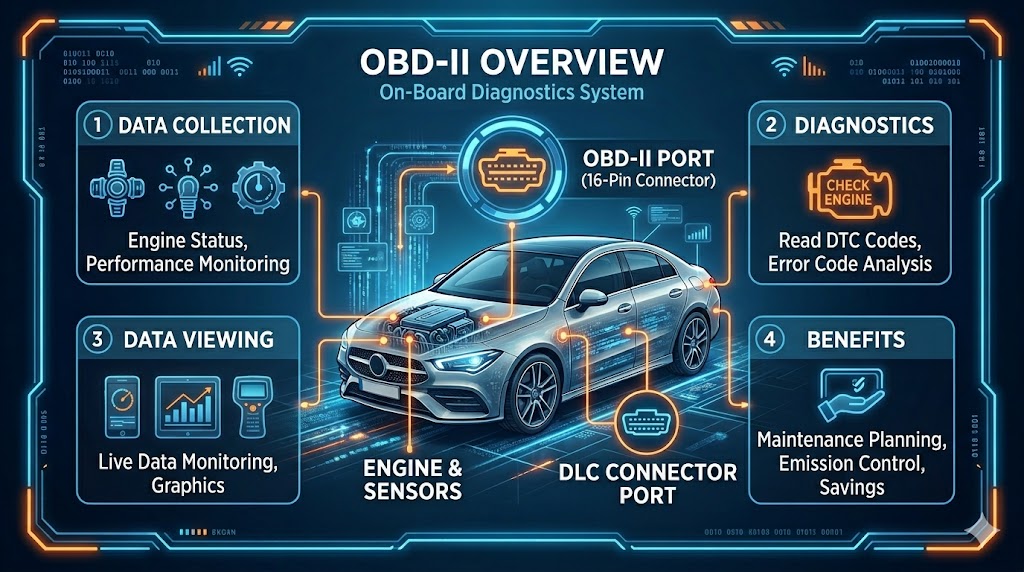
Modern onboard diagnostic systems monitor the rotation of the crankshaft using an optical or magnetic sensor. When a cylinder ignites correctly, the piston forces the crankshaft downward, generating an instantaneous acceleration pulse. If a cylinder fails to fire, that momentary speed boost never occurs. The onboard computer flags that microsecond deceleration as a misfire fault. To learn more about navigating your scanner data, review Engine diagnostic codes: Your Complete Guide to OBD2.
| DTC Code | Description | Primary Fault Area |
|---|---|---|
| P0300 | Random/Multiple Cylinder Misfire Detected | System-wide issue (fuel pressure, mass airflow, vacuum) |
| P0301 | Cylinder 1 Misfire Detected | Cylinder 1 (spark, injector, compression) |
| P0302 | Cylinder 2 Misfire Detected | Cylinder 2 (spark, injector, compression) |
| P0303 | Cylinder 3 Misfire Detected | Cylinder 3 (spark, injector, compression) |
| P0304 | Cylinder 4 Misfire Detected | Cylinder 4 (spark, injector, compression) |
| P0305 | Cylinder 5 Misfire Detected | Cylinder 5 (spark, injector, compression) |
| P0306 | Cylinder 6 Misfire Detected | Cylinder 6 (spark, injector, compression) |
| P0307 | Cylinder 7 Misfire Detected | Cylinder 7 (spark, injector, compression) |
| P0308 | Cylinder 8 Misfire Detected | Cylinder 8 (spark, injector, compression) |
Distinguishing between a single-cylinder code and a multi-cylinder code provides an essential shortcut. When your scanner reports P0301 Code: Causes, Symptoms & How to Fix It, the root cause almost always lives locally on that isolated cylinder. Conversely, encountering a generic P0300 Code: Causes, Symptoms & How to Fix It Fast usually implies a systemic problem affecting the whole motor, such as unmetered air entering the intake manifold or depleted fuel rail pressure.
Common Symptoms: How to Tell Your Engine Is Misfiring
Identifying the physical signs of a misbehaving cylinder helps you assess severity before pulling out hand tools. The symptoms of cylinder misfire manifest in unmistakable mechanical feedback during normal operation:
- Vibration and rough idle: The vehicle shivers violently at stoplights or while idling in park because the balance of the crankshaft rotation has been disrupted.
- Hesitation during acceleration: Pressing the gas pedal results in stumbling, sputtering, or a dead spot where the car struggles to pick up speed.
- Unusual exhaust odors and sounds: You may smell raw fuel drifting from the tailpipe, often accompanied by spitting or popping exhaust notes.
- Decreased fuel efficiency: The computer attempts to compensate for improper combustion by adjusting fuel trims, causing fuel consumption to spike noticeably.
- Check engine light changes: The dashboard warning remains illuminated or, in dangerous cases, starts blinking rapidly under load.
The 4 Root Causes of Engine Misfire Codes P0300 to P0308
Every four-stroke gasoline engine requires four foundational elements to complete a stroke successfully: electrical spark, appropriate fuel volume, correct air volume, and mechanical compression. If any single pillar falters, a misfire code registers immediately.
1. Ignition System Failures
Ignition degradation stands as the culprit in the vast majority of isolated cylinder complaints. Spark plug electrodes naturally wear down, expanding the gap until the ignition coil cannot bridge the distance under cylinder pressure. Coils also crack internally, leaking high-voltage energy directly into the cylinder head casting rather than directing it to the plug tip. In vehicles retaining high-tension leads, dried and brittle plug wires can short out against neighboring metallic components.
2. Fuel Delivery Issues
A cylinder deprived of gasoline or soaked with excessive fuel cannot ignite properly. Fuel injectors feature microscopic delivery nozzles that easily clog with carbon deposits and fuel varnishes. Electrical solenoids inside fuel injectors also fail after millions of operational cycles. System-wide fuel delivery issues, such as a clogged filter or a failing fuel pump, leave fuel rails starved for pressure, triggering widespread codes alongside codes like P0002 CODE: Causes, Symptoms, and Expert Fix Guide or p0003 code: How to Diagnose & Fix Fuel Volume Regulator.
3. Air and Vacuum Leaks
Internal combustion demands an exact air-to-fuel ratio, typically hovering near 14.7 parts air to 1 part gasoline. When unmetered air sneaks past intake manifold gaskets, cracked plastic vacuum lines, or a torn intake boot, that mixture becomes exceedingly lean. A lean air-fuel charge resists ignition from the spark plug. This condition often introduces concurrent lean codes like P0171 Code: Step-by, especially at low idle speeds when manifold vacuum runs strongest.
4. Mechanical and Compression Problems
When ignition and fueling check out spotless, the mechanical health of the rotating assembly must be questioned. Low compression means the air-fuel charge cannot be squeezed tightly enough to sustain an efficient burn. Culprits include recessed intake valves, burnt exhaust valves, blown head gaskets, or worn piston rings. Timing chain stretching or guide wear can also throw off valve synchronization, a condition frequently paired with codes like P0008 Code: Symptoms, Causes, and Costly Mistakes to Avoid.
Can You Drive With a Misfire Code? (Solid vs. Flashing CEL)
Determining whether your vehicle remains drivable hinges directly on how that dashboard light behaves. Knowing when to park your vehicle prevents a minor electrical inconvenience from escalating into a four-figure repair bill.
CRITICAL WARNING: A flashing check engine light misfire means unburned fuel is actively dumping into your exhaust stream. When raw gasoline hits an operating catalytic converter, it ignites internally, pushing temperatures past 2,000°F. This thermal shock melts the fragile ceramic honeycomb in minutes. Pull over immediately, shut down the engine, and arrange a tow.
If the check engine light stays solid and steady, the misfire occurs infrequently or within limits that do not actively threaten exhaust hardware. You can drive the car cautiously to your garage or a repair shop. Avoid hauling heavy cargo, avoid hard acceleration, and address the diagnostic process without delay. Driving extended distances on even a minor misfire will gradually contaminate engine oil and load exhaust components with soot, eventually creating expensive headaches like a P0420 Code: 5 Ways to Fix Your Catalytic Converter Issues.
Step-by-Step Diagnostic Workflow: Stop Guessing, Start Testing
Rather than replacing parts at random, follow this disciplined diagnostic routine. It costs almost nothing, isolates the broken component through simple logic, and keeps your budget fully protected.
- Scan for secondary and companion codes: Plug your OBD2 scan tool into the port under the steering column. Document all active, pending, and permanent trouble codes. If you see transmission communication faults like What is P0700 Code and how to fix it? | CarAutomobileHub | OBD or EVAP warnings like P0455 Code: 5 Easy Fixes for Your EVAP System Leak, record them. Pay particular attention to fuel pressure faults like P0004 code: Symptoms, Causes, and How to Fix It or circuit issues like P0005 code, P0005 OBD2 code, engine code P0005, DTC P0005, P0005 code meaning, P0005 fuel shutoff valve, fuel shutoff valve A control circuit open, which instantly narrow down systemic failures.
- Perform the Component Swap test: If you pulled an isolated code like P0302 (Cylinder 2), locate cylinder 2 on your engine block. Remember that cylinder numbering is determined by engine block casting and manufacturer firing order, not simply counting front-to-back from the driver seat; consult your vehicle service manual for the exact layout. Unbolt the ignition coil on cylinder 2 and swap its location with the coil on cylinder 1. Clear the codes, start the engine, and wait for the code to return. If the code shifts to P0301, the coil is broken. If the code stays at P0302, your coil is working fine, and you just saved seventy dollars.
- Inspect spark plug physical condition: Remove the spark plug from the problematic cylinder and read its tip. A healthy plug shows a light tan or grey deposit. A wet, black tip smelling of gasoline indicates an ignition misfire where the plug failed to spark. Heavy black soot points to a leaking fuel injector. White blistering suggests extreme lean running, while wet engine oil coating the threads points to failing valve cover spark plug tube seals or broken oil control rings.
- Listen to the fuel injectors: Place the metal tip of a long mechanic screwdriver against the plastic body of the suspect fuel injector while resting the plastic handle firmly against your ear. With the engine idling, you should hear a crisp, rapid clicking sound as the internal pintle opens and closes. Silence or a muffled thud means the injector is electrically dead or mechanically jammed.
- Check for unmetered vacuum leaks: Inspect every rubber vacuum line, PCV hose, and intake duct for tears or loose clamps. With the engine idling, you can carefully mist short bursts of unchlorinated brake cleaner or carburetor spray around intake manifold seams. If the engine idle suddenly surges or smooths out, atmospheric air is being drawn in through a torn gasket at that exact location.
- Perform a compression test: If spark, fuel, and vacuum checks pass without resolving the issue, thread a compression gauge into the spark plug hole. Disable the fuel pump, open the throttle fully, and crank the engine over five or six revolutions. Healthy cylinders usually generate between 130 and 180 PSI, and all cylinders across the block must register within 10 to 15 percent of one another. A cylinder reading substantially lower indicates internal mechanical damage.
Estimated Repair Costs for Misfire Codes
The financial impact of resolving engine misfire codes p0300 to p0308 spans a broad spectrum depending on whether you handle the labor at home or hand the keys to an independent mechanic.
| Repair Type | DIY Parts Cost | Professional Shop Cost |
|---|---|---|
| Single Spark Plug Replacement | $8 – $20 | $100 – $220 |
| Ignition Coil Pack (Single) | $35 – $95 | $180 – $320 |
| Full Set of Spark Plugs & Coils | $120 – $350 | $400 – $900 |
| Fuel Injector Replacement (Single) | $45 – $140 | $280 – $550 |
| Intake Manifold Gasket | $25 – $65 | $350 – $750 |
| Catalytic Converter (if melted) | $300 – $900 | $1,200 – $2,600 |
| Engine Head Gasket / Mechanical | $150 – $400 | $1,800 – $3,500+ |
Conclusion
Diagnosing engine misfire codes p0300 to p0308 does not require professional factory credentials or hundreds of dollars thrown at random replacement parts. By respecting the four basics of combustion and relying on simple component swapping, you can methodically narrow down the problem in your own driveway. Take immediate action whenever a flashing check engine light appears, keep your cool when reading scan codes, and let logic guide your tools.
Frequently Asked Questions
Can bad gas cause a P0300 code?
Yes, contaminated fuel or gasoline with excessive water content will prevent clean combustion across multiple cylinders simultaneously. This almost always produces a random multi-cylinder P0300 code rather than an isolated single-cylinder code.
Will a misfire code clear itself after fixing the problem?
Yes, modern engine computers will automatically turn off the check engine light once the vehicle completes a specific number of drive cycles without detecting another misfire. However, manually clearing the code with a scan tool lets you verify immediately whether the repair worked.
Why does my car misfire only when accelerating or idling?
Misfires at idle are frequently triggered by vacuum leaks or dirty fuel injectors because air-fuel imbalances are most severe when manifold pressure is low. Misfires under heavy acceleration typically indicate failing ignition coils or worn spark plugs, as high engine load requires significantly more electrical voltage to jump the spark plug gap.
What is the most common cause of code P0300?
The most frequent trigger for a general P0300 code is a vacuum leak in the intake system or low fuel rail pressure. Because these conditions affect all cylinders equally, the engine computer registers random misfires across multiple combustion chambers.
How do I know which cylinder is Cylinder 1?
Cylinder 1 is determined by the manufacturer based on the front of the engine block, which is the side with the serpentine accessory belts. On V6 or V8 engines, Cylinder 1 is the forward-most cylinder on the leading cylinder bank, though you should always confirm your engine firing order in a repair manual.
