

P0307 code, A rough, shuddering engine paired with an illuminated check engine light usually points straight to an engine balance problem, and finding a P0307 code stored in your powertrain control module confirms that cylinder 7 is failing to carry its weight. This specific diagnostic trouble code appears exclusively on engines packing seven or more cylinders—predominantly American V8 and V10 trucks, muscular SUVs, and performance sedans. When a cylinder drops out, raw fuel washes down cylinder walls, raw exhaust rattles your catalytic converter, and power falls off a cliff. Rather than throwing expensive replacement parts at your engine bay on a hunch, you can isolate the real culprit using methodical testing steps in your own garage.
Key Takeaways
- Code P0307 indicates a persistent or intermittent combustion failure specifically inside cylinder number seven.
- A flashing check engine light signifies raw fuel entering the exhaust stream, risking catastrophic catalytic converter meltdown within miles.
- Cylinder numbering differs drastically between automakers; knowing your bank layout prevents testing the wrong cylinder.
- Free diagnostic methods like the ignition coil swap allow you to confirm bad components before spending money.
- The underlying source almost always falls into one of three buckets: ignition failure, fuel delivery restriction, or mechanical compression loss.
What Does Trouble Code P0307 Mean?
A P0307 code stands for “Cylinder 7 Misfire Detected.” Your vehicle’s engine control module (ECM) monitors the rotational speed of the crankshaft using high-resolution signals from the crankshaft position sensor. Every time a cylinder fires on its power stroke, it provides a slight acceleration kick to the crankshaft. When cylinder 7 fails to ignite its air-fuel mixture properly, the crankshaft momentarily slows down instead of speeding up. If the computer tallies enough of these dropped power pulses over a specific sample period, it logs the fault code.
Unlike broad multi-cylinder issues like a P0300 Code: Causes, Symptoms & How to Fix It Fast or single-cylinder alerts on smaller cars like a P0301 Code: Causes, Symptoms & How to Fix It, P0307 can only physically trigger on engines configured with at least seven combustion chambers, making it an exclusive visitor on V8, V10, and V12 architectures.
You will encounter two distinct categories of misfires: intermittent and continuous. An intermittent misfire happens occasionally—perhaps only when you step hard on the throttle to pass a trailer on an incline or during a cold morning start. A continuous, or “dead,” misfire occurs on every single engine cycle, leaving the engine shaking violently at idle and robbing you of significant horsepower around the clock.
How to Locate Cylinder 7 on Your Engine
Before you turn a single wrench, you must identify which cylinder actually wears the number seven badge. Cylinder numbering conventions are not standardized across all manufacturers, and tearing down the wrong side of your engine bay waste hours of effort.
On Ford V8 engines (such as the 4.6L, 5.4L Triton, and 5.0L Coyote), Ford numbers cylinders consecutively down each bank. The passenger side houses cylinders 1, 2, 3, and 4 from front to back. The driver side houses cylinders 5, 6, 7, and 8. Therefore, on a Ford V8, cylinder 7 is the third cylinder back from the front on the driver’s side (Bank 2).
General Motors (Chevy/GMC Small Block and LS/LT platforms) uses an alternating sequence. Cylinders on Bank 1 (the driver side) are odd numbers: 1, 3, 5, and 7. Bank 2 (the passenger side) carries even numbers: 2, 4, 6, and 8. That places cylinder 7 at the very back of the engine bay on the driver’s side, directly against the firewall.
Ram and Dodge Hemi engines follow a pattern identical to General Motors: odd cylinders sit on the driver side (Bank 1), while even cylinders sit on the passenger side (Bank 2). On a 5.7L or 6.4L Hemi, cylinder 7 is also the rearmost cylinder closest to the driver-side firewall. When working on European or Asian V8 platforms, consult the vehicle firing order diagram found in your factory workshop manual, as Bank 1 may sit on either side depending on how the manufacturer designates cylinder one.
Common Symptoms of a Cylinder 7 Misfire
Misfires rarely go unnoticed because an unbalance in a heavy rotating assembly makes itself known immediately through tactile and audible feedback. Depending on whether your misfire is mild or dead, you might experience a wide spread of symptoms.
The first indicator is always the check engine light. A solid yellow light means the computer has detected the fault but emission thresholds have not hit catastrophic levels yet. If the light flashes rhythmically, pull over as soon as safely possible. A flashing check engine light indicates an active, severe misfire that is dumping raw, unburned fuel straight down the exhaust pipe. That raw fuel ignites inside the scorching honeycombed core of your catalytic converter, superheating it past 1,600 degrees Fahrenheit and causing permanent internal melting within minutes, turning an inexpensive tune-up into a major exhaust overhaul that mirrors severe catalyst breakdown seen in a P0420 Code: 5 Ways to Fix Your Catalytic Converter Issues.
Beyond dash alerts, you will feel distinct physical quirks:
- Rough Idle and Cab Vibration: The engine will shake noticeably while sitting in gear at red lights, sending a rhythmic vibration through the steering wheel and seat cushions.
- Stumbling Under Acceleration: Tipping into the gas pedal, especially in higher gears at low RPMs, will trigger a bucking sensation or heavy hesitation as cylinder 7 fails under load.
- Heavy Fuel Odor: The exhaust will emit an unmistakable gasoline smell due to unburned fuel escaping past the open exhaust valve.
- Severe Fuel Economy Drops: The vehicle computer attempts to balance engine output by adjusting fuel trims, causing your miles-per-gallon readout to nosedive.
Primary Causes of Code P0307 (The Big Three)
Diagnosing a misfire requires understanding what a cylinder needs to achieve combustion: a hot spark at the exact right millisecond, a precise spray of atomized fuel, and physical compression to squeeze the mixture. When evaluating P0307 causes, technicians divide their focus into these three foundational systems.
1. Ignition System Failures
Ignition failure remains the most frequent trigger for cylinder-specific faults. Spark plugs wear out over time as their center and ground electrodes erode, expanding the plug gap until the coil can no longer push voltage across it under cylinder pressure. Carbon tracking on the porcelain insulator, cracked spark plug boots that allow the high-voltage spark to ground out against the cylinder head, and burned-out coil-on-plug (COP) internal windings are common culprits. On older engines utilizing spark plug wires and distributor caps, brittle or high-resistance plug wires cause identical trouble.
2. Fuel Delivery Issues
If spark is present, lack of combustible fuel leaves the cylinder cold. Fuel injectors operate on high-speed electromagnetic solenoids that spray a fine mist of gasoline into the intake port or directly into the combustion chamber. An injector can become physically clogged with varnish or debris, fail electrically when its internal coil winds open, or suffer from damaged harness wiring. Conversely, a stuck-open fuel injector floods the cylinder, fouling the plug and preventing combustion altogether.
3. Mechanical and Compression Faults
When spark and fuel check out clean, internal mechanical integrity must be questioned. If a cylinder cannot squeeze the air-fuel mixture, combustion cannot produce force. Low compression on cylinder 7 often stems from a burned exhaust valve that fails to seal against its seat, a cracked or broken valve spring, worn piston rings that let compression bleed into the crankcase, or a blown head gasket allowing pressure to vent to an adjacent cylinder or water jacket. Camshaft lobe wear—a known issue on some high-mileage modern V8 overhead-cam and roller-lifter setups—can also prevent the valves from opening fully.
Secondary and Ancillary Culprits
Do not overlook localized vacuum leaks. A cracked intake manifold gasket right at the intake runner for cylinder 7 lets unmetered air enter that specific port, creating an ultra-lean environment that spark cannot ignite. In rare scenarios, an internal driver inside the powertrain control module fails, leaving the coil or injector without its ground trigger signal.
| Misfire Category | Typical Symptoms | Diagnostic Tool Needed | Likely Problem Areas |
|---|---|---|---|
| Ignition Fault | Sharp stumbling under load; sudden onset; flashing CEL | OBD2 Scanner, Spark Tester | Spark plug, Coil boot, Ignition coil, Plug wire |
| Fuel Delivery | Engine leans out; rough cold start; fuel odor or ticking | Noid light, Multimeter, Stethoscope | Clogged injector, Broken wiring harness, Stuck pintle |
| Mechanical Loss | Steady chugging idle; misfire remains across all RPMs | Compression gauge, Leak-down tester | Burned valve, Collapsed lifter, Head gasket failure |
Step-by-Step Diagnostic Guide (DIY Friendly)
Stop replacing parts blindly. If you buy a set of expensive fuel injectors only to find out you had a fouled five-dollar spark plug, you have wasted both money and daylight. Follow this disciplined five-step diagnostic process to isolate the failure point cleanly.
Step 1: Scan for Companion Diagnostic Codes
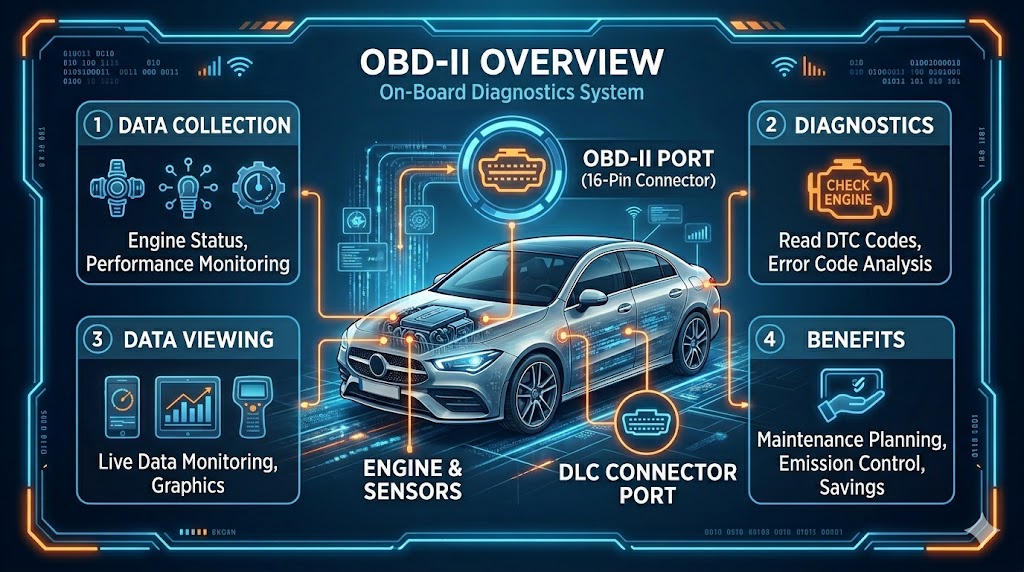
Plug an OBD2 scanner into your vehicle’s diagnostic port and check for additional trouble codes stored alongside P0307. Look for codes that provide context. If you see fuel trim trouble like a lean bank code or a P0171 Code: Step-by, your misfire might stem from a vacuum leak at the intake runner. If you pull a code like P0207, the computer has already told you that cylinder 7’s fuel injector circuit has an electrical break. If you encounter timing-related anomalies similar to a P0008 Code: Symptoms, Causes, and Costly Mistakes to Avoid, mechanical timing components could be at fault. Understanding Engine diagnostic codes: Your Complete Guide to OBD2 prevents you from viewing your misfire in isolation.
Step 2: Perform the Coil Swap Trick
The coil swap technique is the single most effective, zero-cost diagnostic test for coil-on-plug engines. It definitively answers whether you are dealing with an ignition coil vs fuel injector misfire or mechanical fault without buying a single tool.
Pro Tip: To execute the coil swap, disconnect the wiring harness and unbolt the ignition coil from cylinder 7. Remove the ignition coil from an easily accessible cylinder on the opposite bank—cylinder 1 or cylinder 2. Swap their positions completely: place coil 7 onto cylinder 1, and place the known-good coil onto cylinder 7. Clear the trouble codes with your scanner, start the vehicle, and drive until the misfire returns. If the new code is P0301 (or P0302), the misfire migrated with the coil, confirming 100% that your ignition coil is defective. If code P0307 returns on the exact same cylinder, your coil is fine, and you saved fifty to one hundred dollars.
Step 3: Inspect and Read the Spark Plug
Pull the spark plug from cylinder 7 and inspect its physical condition under bright lighting. The appearance of the firing tip reveals what is happening inside the combustion chamber. If the plug is covered in black, wet gasoline, the cylinder is getting fuel but no spark. If the plug shows heavy, dry, velvety black carbon deposits, the cylinder is running excessively rich or has weak spark. White, blistered insulator tips indicate severe overheating or a dangerous lean condition. Check the electrode gap against factory specifications with a wire-type feeler gauge; worn gaps force the ignition coil to run hot and eventually burn out.
Step 4: Test the Fuel Injector
If spark looks healthy, focus on fuel delivery. With the engine idling, take a long mechanic’s stethoscope (or press the metal tip of a long screwdriver against the body of injector 7 with your ear against the handle). You should hear a distinct, sharp, rhythmic metallic clicking sound as the internal solenoid opens and closes. If the injector is silent, it is not pulsing. Turn off the engine, disconnect the electrical plug, and use a digital multimeter set to ohms to measure the injector’s resistance across its two pins. Compare this reading against an adjacent injector; an open circuit (infinite resistance) or a shorted coil means the injector must be replaced. You can also plug a cheap noid light into the harness connector while cranking to confirm the PCM is sending the ground pulse signal.
Step 5: Verify Mechanical Compression
If cylinder 7 has a functional ignition coil, a fresh spark plug, and a pulsing fuel injector, the issue is mechanical. Thread a compression tester into the spark plug hole of cylinder 7, disable the fuel pump relay, prop the throttle plate wide open, and crank the engine over four to five compression strokes. Note the peak pressure on the gauge, then run the same test on two adjacent cylinders. Healthy cylinders should generate within 10 to 15 percent of each other (typically between 150 to 185 PSI on healthy modern V8s). If cylinder 7 registers zero or reads significantly below its neighbors, perform a cylinder leak-down test to listen for air escaping past the intake valves, tailpipe (exhaust valve), or oil filler cap (rings).
How Much Does It Cost to Fix Code P0307?
The financial impact of a P0307 repair depends entirely on which component failed along the combustion chain. Taking the DIY route dramatically lowers the bill, as labor often accounts for over half the cost at an independent repair shop or dealership.
For simple ignition repairs, a high-quality replacement spark plug costs between $8 and $20, while an OEM-grade ignition coil-on-plug runs between $40 and $110. Tackling this in your driveway requires only basic hand tools, keeping total costs well under $100. If an independent shop handles the job, expect to pay between $160 and $280, with labor making up the difference.
If testing points to a bad fuel injector, a replacement component costs anywhere from $60 to $180 depending on whether your truck uses port injection or high-pressure direct injection. Professional labor to remove fuel rails and intake plenums generally pushes a shop repair quote into the $250 to $500 bracket.
The worst-case scenario involves mechanical failure. If cylinder 7 suffered a burned exhaust valve, a broken valve spring, or a blown head gasket, cylinder heads must be pulled and machined. A professional head gasket repair or valve job runs between $1,400 and $3,000 depending on the vehicle platform, labor rates, and the extent of internal damage.
Conclusion
Seeing a P0307 code flash across your dashboard can feel intimidating, but an organized diagnostic approach removes the anxiety. Misfires are not mysterious; they are simply a failure of spark, fuel, or compression in a designated cylinder. By identifying your exact cylinder layout, running the coil-swap trick, and methodically inspecting your spark plug and fuel injector, you can pinpoint the root cause without spending a dime on parts you do not need. Grab your scan tool, take your time in the garage, and solve the issue before raw fuel does expensive damage to your catalytic converter.
Frequently Asked Questions
Can I drive with a P0307 code?
You can carefully drive a very short distance to reach home or a shop if the check engine light is solid, but do not ignore it. If the check engine light is flashing, pull over immediately; an active misfire dumps unburned gasoline into your exhaust system, which will melt your catalytic converter in just a few miles.
Will a P0307 code clear itself once fixed?
Yes, but it takes time. Once the mechanical or electrical fault is repaired, the engine control module must complete several drive cycles without detecting a misfire before it turns off the light. To verify the repair immediately, use an OBD2 scanner to clear the code and check if it stays away.
What happens if I ignore a Cylinder 7 misfire?
Ignoring the problem causes progressive, costly damage. Unburned fuel washes the lubricating oil off the cylinder walls, leading to accelerated piston ring and cylinder bore wear, while unburned hydrocarbons enter the exhaust to destroy the catalytic converter. Over time, you also risk catastrophic valve and engine damage.
Why is cylinder 7 more prone to misfires on some V8 engines?
On several common V8 designs, cylinder 7 sits at the back corner of the engine bay directly against the firewall on Bank 1. This location experiences higher under-hood heat retention, receives less direct airflow, and sits at the far end of the fuel rail, making it slightly more vulnerable to heat-related electrical fatigue and debris buildup.
How do I know if my misfire is caused by an ignition coil or a fuel injector?
Swap the ignition coil from cylinder 7 to an adjacent cylinder and clear the codes. If the misfire follows the coil to the new cylinder, the ignition coil is bad. If the misfire stays on cylinder 7, use a multimeter or noid light to test the injector and its wiring circuit.
