

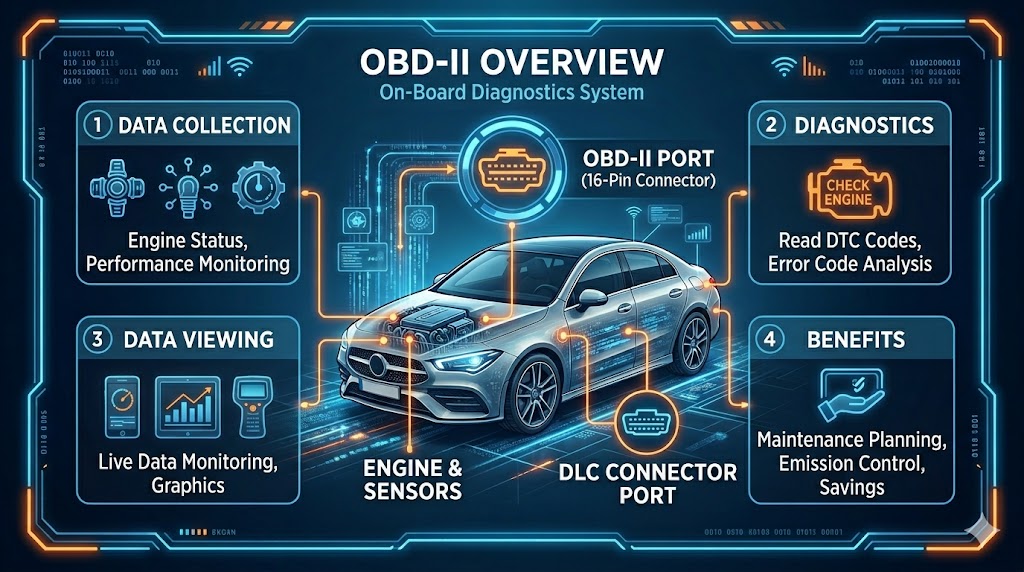
P0300 code, A sudden shudder at a red light, a sputtering engine on the highway on-ramp, and an amber warning glowing on your dash usually point to one familiar trouble code: the P0300 code. Finding this diagnostic fault on your scanner can feel intimidating because the definition—P0300 random multiple cylinder misfire detected—gives no single component to blame. Unlike a code pointed at one isolated plug or coil, this error means cylinders across the entire engine block are failing to complete combustion smoothly. Jumping straight to replacing parts without a clear test plan often leaves your wallet lighter while the stumble remains untouched.
Key Takeaways
- A solid check engine light allows you to drive cautiously to a repair point, but a flashing check engine light indicates active raw fuel dumping into the exhaust, which can ruin your catalytic converter within minutes.
- P0300 signals that multiple cylinders are misfiring randomly, pointing toward shared engine systems like intake air metering, fuel delivery, vacuum integrity, or primary timing rather than an isolated spark plug.
- Diagnosing live fuel trim data (STFT and LTFT) with an inexpensive scan tool reveals whether your engine runs lean from an unmetered air leak or rich from fuel delivery faults.
- Systematic testing prevents “firing the parts cannon,” saving you from buying full sets of expensive coil packs when a cracked four-dollar vacuum elbow is the actual culprit.
What Does the P0300 Code Actually Mean?
The P0300 code indicates that your vehicle’s engine control module (ECM) or powertrain control module (PCM) has registered combustion failures occurring across multiple cylinders at random intervals. To understand how your vehicle catches this fault, picture the crankshaft spinning thousands of times every minute. Each time a spark plug ignites an air-fuel charge, that power stroke pushes the piston downward, giving the crankshaft a tiny rotational kick that accelerates it for a fraction of a millisecond.
Your engine monitors these micro-accelerations continuously using the crankshaft position sensor, paired with the camshaft position sensor. When a cylinder fails to fire properly—whether from missing spark, improper fuel balance, or low compression—that expected kick never arrives. Instead, the crankshaft momentarily drags and slows down. When the PCM detects these micro-decelerations happening erratically across several cylinders rather than repeating on just cylinder one or cylinder four, it triggers the broad P0300 diagnostic trouble code.
alt metni: Diagnostic scan tool connected to OBD2 port displaying P0300 random misfire code
Is It Safe to Drive With Code P0300?
Determining whether your vehicle is safe to drive depends entirely on the behavior of your check engine light. If the light stays steadily illuminated, your engine is experiencing intermittent or low-frequency misfires. You can generally drive the vehicle home or to a nearby repair shop at moderate speeds. Avoid heavy acceleration, hauling cargo, or driving up steep grades, as extra load increases combustion pressure and makes misfiring worse.
If you see a flashing check engine light p0300, the situation shifts from inconvenient to critical. A blinking light signals a severe, continuous misfire that is dumping unburned fuel straight out of the exhaust valves. When raw gasoline hits your red-hot catalytic converter, it ignites directly on the precious metal honeycomb inside. Temperatures can soar beyond 1,600 degrees Fahrenheit, melting the internal ceramic core and destroying the converter in just a few miles.
A flashing check engine light demands immediate action: pull over safely, switch off the ignition, and arrange for a tow truck. Continuing to drive with an actively flashing misfire will quickly turn a basic ignition repair into a costly exhaust overhaul, often leading straight to a P0420 Code: 5 Ways to Fix Your Catalytic Converter Issues.
Common Symptoms of P0300
Because combustion is breaking down across several cylinders, the engine cannot deliver smooth rotational balance. Drivers typically notice a collection of physical and sensory warnings long before checking the diagnostic port:
- Rough Idle and Cabin Vibration: The vehicle shivers, shakes, or rocks when idling at stoplights, smoothing out slightly as engine speed increases.
- Hesitation and Stumbling: Stepping on the gas pedal produces a jerky, lagging response instead of predictable acceleration.
- Fuel Odor Around the Tailpipe: Incomplete combustion sends unspent fuel down the exhaust pipe, creating a distinct, rich gasoline smell outside the car.
- Sharp Drop in Fuel Efficiency: The PCM often tries to compensate for perceived oxygen sensor readings by altering fueling strategies, while unburned fuel is wasted directly out the tailpipe.
- Hard Starting or Extended Cranking: The engine may take several seconds of cranking before catching, particularly when cold.
- Limp Mode Activation: Modern vehicles may limit engine power and throttle opening to shield the drivetrain from mechanical stress.
P0300 vs. P0301–P0308: Why the Distinction Matters
One of the most expensive mistakes amateur mechanics make is treating code P0300 the same way they treat codes P0301 through P0308. If your diagnostic scanner reads P0303, your PCM is pointing a finger at cylinder three. In that scenario, pulling that specific spark plug, testing its ignition coil, or inspecting its fuel injector makes total sense.
A random multiple cylinder misfire operates on a broader scale. Individual components like a single ignition coil or one dirty spark plug rarely trigger a P0300 by themselves; they trigger their own designated cylinder code. When misfires bounce around between cylinders two, four, and five without sticking to one location, you must direct your attention to the systems that feed the entire engine equally. Replacing four, six, or eight ignition coils right away is an expensive gamble that rarely fixes a genuine P0300.
Common Causes of Code P0300
Pinpointing what causes code p0300 requires evaluating the three pillars of internal combustion: air, fuel, and spark, alongside engine timing. When an issue impacts the common supply lines for these elements, random misfires follow quickly.
1. Unmetered Air and Vacuum Leaks
Engines rely on exact air measurements to meter fuel correctly. Unmetered air entering downstream of the mass air flow sensor dilutes the air-fuel mixture, making it excessively lean. Cracked rubber PCV elbows, dry-rotted brake booster lines, or hardened intake manifold gaskets allow outside air to seep in. At idle, when intake manifold vacuum is highest, these leaks thin out the air-fuel charge so severely that several cylinders fail to combust cleanly. This condition frequently triggers companion trouble codes such as the P0171 Code: Step-by diagnostic trouble guide.
2. Fuel Delivery Starvation
If your engine is starved of fuel pressure or volume, the cylinders farthest along the fuel rail or those under sudden load will drop out. A weakening fuel pump, a clogged inline fuel filter, or a failing fuel pressure regulator reduces rail pressure across the board. The injectors still click open, but they cannot spray enough misted fuel to generate a clean flame front.
3. Sensor and Metering Errors
The Mass Air Flow (MAF) sensor uses a delicate heated wire to calculate the weight of incoming air. Over thousands of miles, microscopic oil particles and road dust coat this wire, insulating it and skewing air readings low. The PCM injects fuel based on these understated numbers, starving the cylinders. Similarly, a worn crankshaft position sensor can send erratic timing pulses, causing the PCM to trigger spark at slightly misaligned crank angles.
4. Worn Ignition Components
While an individual coil failure produces a single-cylinder code, a vehicle running spark plugs that have exceeded their service life by 40,000 miles will eventually suffer widespread misfires. Over time, electrical erosion widens the plug gap. As that gap grows, the ignition system must generate significantly more voltage to jump the divide. Under load or during humid mornings, multiple plugs may fail to spark reliably.
5. Mechanical and Exhaust Restrictions
A sticking Exhaust Gas Recirculation (EGR) valve that stays partially open at idle will flood the intake plenum with inert exhaust gases, choking out combustion across every cylinder. Additionally, slack timing chains or stretched belts allow camshaft phasing to wander slightly, throwing valve events off across both cylinder banks.
Step-by-Step Diagnostic Checklist
Follow this structured, shop-proven approach for p0300 diagnosis steps instead of throwing expensive parts at your engine bay. All you need is an inexpensive OBD2 scanner capable of reading live data, a basic hand tool set, and a can of aerosol cleaner.
Step 1: Scan for Companion Codes and Read Freeze Frame Data
Never look at P0300 in isolation. Connect your scanner and read all active, pending, and historical fault codes. If you see specific codes alongside P0300—such as P0101 (MAF sensor range), P0171 (System Too Lean Bank 1), or transmission communication faults like those discussed in What is P0700 Code and how to fix it? | CarAutomobileHub | OBD—they tell you exactly which subsystem is destabilizing your engine. For broader context on how these digital handshakes work, reviewing our guide on Engine diagnostic codes: Your Complete Guide to OBD2 provides helpful diagnostic foundation.
Next, open the Freeze Frame menu on your scanner. Freeze frame records an operating snapshot the exact millisecond the code set. Check the engine RPM, vehicle speed, and engine coolant temperature. If the misfire occurred at 700 RPM while idling at a dead stop, you are likely dealing with a vacuum leak or dirty idle air passage. If it triggered at 3,200 RPM under wide-open throttle on the highway, your primary suspects are fuel delivery volume or high-rpm ignition breakdown.
Step 2: Perform a Methodical Visual Inspection
Pop the hood and look over the engine bay with a strong flashlight before touching any bolts. Inspect the large accordion-style rubber intake boot running between your air filter box and the throttle body. These boots frequently split along their lower ribs where oil and heat accumulate, admitting unmetered air that the MAF sensor never accounts for. Trace every small vacuum hose, check the PCV valve grommet, and inspect the main engine wiring harness for chafing against metal brackets or signs of rodent damage.
Step 3: Analyze Live Fuel Trim Data
Switch your scanner to live data view and locate Short Term Fuel Trim (STFT) and Long Term Fuel Trim (LTFT). Fuel trims represent the percentage of fuel the PCM adds or subtracts to maintain the ideal 14.7:1 air-fuel balance. Healthy fuel trims typically fluctuate within plus or minus 5 to 7 percent.
If your combined fuel trims (STFT + LTFT) show positive numbers above +15% to +25% at idle, your engine is running extremely lean, and the computer is pumping in extra fuel to compensate. Now, rev the engine and hold it steady at 2,500 RPM while watching those trims:
- Trims drop back down toward zero at 2,500 RPM: You have an intake vacuum leak. At higher engine speeds, the sheer volume of air rushing through the throttle plate makes small vacuum leaks insignificant.
- Trims stay high or climb higher at 2,500 RPM: You have a fuel starvation problem (failing pump, clogged filter) or a contaminated MAF sensor failing to report real airflow under load.
Step 4: Check for Vacuum Leaks
If your fuel trims pointed toward an air leak, direct a short, controlled burst of unchlorinated brake cleaner or carburetor spray around suspected intake gasket mating surfaces and vacuum fittings while the engine idles. If the idle stabilizes or engine pitch changes abruptly when you spray a specific spot, you have found the leak path. For a safer, non-flammable test, professional smoke machines pumped into a sealed intake reveal leaking gaskets instantly.
Step 5: Inspect and Clean the MAF Sensor and Throttle Body
Disconnect your negative battery terminal, unplug the MAF electrical connector, and unbolt the sensor from the intake tube. Look inside the sampling tube at the tiny platinum sensor wires. If they appear dark or dusty, spray them generously using dedicated Mass Air Flow Sensor Cleaner. Never use brake cleaner, carburetor cleaner, or shop towels on these components, as harsh solvents and physical contact will break the delicate wires. Allow the sensor to air dry completely for ten minutes before reinstalling it.
alt metni: Comparison of clean spark plug versus fouled and carbon-coated spark plug
Step 6: Pull and Inspect Spark Plugs
Remove the spark plugs to read combustion conditions across your cylinders. Compare the business end of each plug against healthy standards. Plugs should show light tan or grayish deposits on the porcelain insulator tip. Heavy black soot indicates incomplete combustion or an overly rich mixture, while blistered white insulators point to dangerous overheating or severe lean conditions. Check the electrode gap with a feeler gauge; an excessively wide gap forces ignition coils to work past their operating limit, resulting in random spark blowout.
Step 7: Verify Fuel Pressure and Engine Health
If air, ignition, and sensors check out clean, thread a mechanical fuel pressure gauge onto the fuel rail test port (Schrader valve). Compare your reading at key-on and during idle against your manufacturer specifications. Low rail pressure confirms a weak fuel pump or clogged filter. Finally, perform a compression check across all cylinders if misfires persist. Consistent compression readings (typically within 10 to 15 percent of each other) rule out mechanical issues such as bent valves, worn rings, or jumped timing chains.
How Much Does It Cost to Fix Code P0300?
Because code P0300 points to a symptom rather than an individual broken part, repair costs vary widely depending on the underlying source. Cleaning a dirty sensor yourself costs next to nothing, whereas replacing an intake manifold gasket or fuel pump demands a larger budget.
| Suspected Component / Fault | DIY Repair Cost | Professional Shop Cost | Labor Difficulty |
|---|---|---|---|
| MAF Sensor Cleaning / Replacement | $10 – $110 | $150 – $280 | Beginner (15–30 mins) |
| Vacuum Line / PCV Hose Replacement | $10 – $35 | $100 – $200 | Beginner (20–45 mins) |
| Full Set of Spark Plugs | $30 – $90 | $180 – $350 | Intermediate (1–2 hours) |
| Intake Manifold Gasket Set | $25 – $75 | $350 – $650 | Advanced (3–5 hours) |
| Fuel Pump Assembly Replacement | $120 – $350 | $550 – $1,100 | Advanced (2–4 hours) |
| Catalytic Converter (if melted by driving) | $350 – $900 | $1,200 – $2,500+ | Intermediate to Advanced |
A classic garage scenario involves a driver spending $300 on an entire set of aftermarket ignition coils to cure a rough idle, only to find the vehicle still shaking on the test drive. Had they spent twenty minutes checking vacuum hoses first, they could have resolved the problem using a four-dollar molded rubber elbow from the local parts store counter. Take the time to test each system before opening your wallet for replacement components.
Conclusion
The P0300 diagnostic trouble code can feel frustrating because it covers so much ground, but finding its source does not require guesswork or dealership-level diagnostic fees. By resisting the urge to replace random parts and instead methodically tracking air leaks, fuel trims, sensor readings, and ignition health, you can pinpoint the true source of your random misfire. Keep safety at the forefront: never ignore a flashing check engine light, protect your catalytic converter, and work through the diagnostic sequence one logical step at a time.
Frequently Asked Questions
Can low fuel cause a P0300 code?
Yes, running with an almost empty gas tank can trigger code P0300. When fuel levels drop extremely low, the fuel pump can ingest pockets of air during hard braking or sharp turns, causing momentary fuel pressure drops that starve multiple cylinders simultaneously.
Can a weak battery or bad alternator trigger P0300?
A dying battery or failing alternator can indirectly trigger a random misfire code. If system voltage drops below twelve volts while the engine runs, fuel injectors open sluggishly and ignition coils fail to reach proper saturation, causing erratic combustion across all cylinders.
Will code P0300 clear itself after fixing the problem?
Once you resolve the root cause, the PCM will clear the code on its own after completing three consecutive drive cycles without detecting misfires. Alternatively, you can clear the code immediately using an OBD2 scan tool to see if the system monitor completes successfully.
Can bad gas cause multiple cylinder misfires?
Fuel contaminated with excessive water, debris, or stale winter blends lacking proper volatility can easily trigger code P0300. Since contaminated fuel flows to all cylinders equally, every combustion chamber suffers from erratic ignition at the same time.
What happens if I ignore a P0300 code?
Ignoring a persistent P0300 leads to excessive carbon buildup on valves, ruined oxygen sensors, and severe unburned fuel contamination in your engine oil. Over time, that unburned fuel enters the exhaust system and permanently destroys your expensive catalytic converter.
