

P0309 code, You are pulling a long grade on the highway, perhaps with an RV or heavy work trailer hitched behind your truck, when a sudden shudder ripples through the floorboards. Moments later, the Check Engine Light pops onto the instrument cluster, and your engine starts idling like a lumpy tractor. Pulling into the nearest parking bay to plug in a scanner reveals the p0309 code. In plain English, the P0309 code is a generic OBD-II powertrain diagnostic trouble code indicating that the engine control module has registered a cylinder 9 misfire detected condition. Because cylinder 9 only exists in vehicles equipped with ten or twelve cylinders, this fault belongs to a distinctive class of big-displacement powerplants with their own mechanical quirks and tight bay clearances.
Key Takeaways
- The P0309 trouble code signals an incomplete combustion event specifically occurring inside cylinder number 9 of a V10 or V12 engine.
- A flashing Check Engine Light signals raw fuel entering the exhaust stream, risking catalytic converter meltdown; pull over and shut down immediately.
- Cylinder numbering differs by manufacturer: a Ford V10 places cylinder 9 near the rear on the driver bank, while European V12s follow alternate numbering sequences.
- A zero-cost ignition coil swap test remains the fastest method to isolate an ignition component failure before spending money on new parts.
What the P0309 Code Actually Means (and Why Only Certain Engines Get It)
Every internal combustion cylinder relies on a tightly synchronized recipe: metered fuel, compressed air, a strong spark delivered at precisely the right millisecond, and sound mechanical sealing. When cylinder 9 fails to generate its expected share of rotational power during its power stroke, the crankshaft slows down fractionally. The engine control unit (ECU) monitors this rotational speed constantly via the crankshaft position sensor. If it detects repeated micro-delays matching the timing of cylinder 9’s firing event, it logs code P0309.
Unlike the ubiquitous P0301 or P0304 codes seen on grocery-getter hatchbacks, you will never see a P0309 on an inline-four, V6, or standard V8. This trouble code belongs strictly to heavy-duty pickups, commercial cutaways, Class A motorhomes, and exotic sports cars. You will encounter it most frequently on the Ford 6.8L Triton V10 (found across F-250, F-350, F-450, and E-Series platforms), Ram trucks with the 8.0L Magnum V10, the Dodge Viper, or high-strung European machines like the BMW E60 M5 (5.0L S85 V10) and Audi S6, S8, or R8 models. Managing a misfire on these platforms requires an understanding of their deep engine bays and crowded firewalls.
Is It Safe to Drive With a P0309 Code? (Flashing vs. Solid Check Engine Light)
The urgency of your situation depends entirely on the behavior of the warning lamp on your dashboard. When the Check Engine Light stays steadily illuminated, the onboard computer is seeing an intermittent or low-frequency misfire. The vehicle can typically limp a short distance to your home garage or a local repair facility at modest speeds, provided you avoid heavy acceleration, towing, or steep grades. The engine will run down on power and consume more fuel, but catastrophic secondary damage is less imminent.
A flashing Check Engine Light changes everything. A blinking warning icon indicates a continuous, severe misfire where unburned air and atomized gasoline dump straight out through the exhaust valve with every non-firing cycle. That raw fuel hits the scorching interior of your catalytic converter, where it ignites and creates runaway temperatures upward of 1,800 degrees Fahrenheit. Within just a few miles, the ceramic substrate inside your catalytic converter can melt into a solid, slag-like block. That turns a manageable ignition repair into a four-figure exhaust replacement. If the light flashes, pull over to a safe area immediately and call a flatbed.
Common P0309 Symptoms You Will Experience
Because ten- and twelve-cylinder engines naturally boast smooth balance characteristics, a single dead cylinder might not shake the vehicle as violently as it would on an inline-four. However, the physical clues remain distinct, particularly under load.
Among the primary p0309 symptoms, expect to notice:
- A noticeable shudder or rhythmic vibration, especially during low-RPM idle at stoplights or under moderate load in overdrive gears.
- Sluggish throttle response, accompanied by a flat spot when trying to accelerate or pull uphill.
- A heavy, pungent smell of unburned gasoline lingering around the tailpipe, sometimes paired with faint popping or backfiring.
- A sudden, steep drop in fuel economy as the engine computer adds fuel to counter the excess oxygen detected by downstream wideband sensors.
- Hard cranking or a labored, unsteady idle upon cold starts after the vehicle has sat overnight.
Top Causes of Code P0309 (Ranked From Most to Least Likely)
Identifying the root mechanical failure becomes far simpler when you categorize the potential p0309 causes in order of real-world probability. The vast majority of these misfires originate in the secondary ignition circuit before branching into fuel delivery or internal mechanical wear.
Worn spark plugs and heat-damaged rubber boots sit at the top of the list. On large-displacement engines, spark plugs endure punishing combustion chamber temperatures. Over tens of thousands of miles, the spark gap widens, requiring more voltage than the coil can comfortably supply. Compounding this, the rubber insulator boots sitting between the coil and plug degrade, harden, and crack under constant engine bay heat. High-voltage electricity inevitably takes the path of least resistance, jumping straight through microscopic cracks in the boot to the cylinder head wall rather than firing across the plug gap.
Failing ignition coil-on-plug (COP) units rank a close second. Electronic coil packs contain internal windings that deteriorate from thermal cycling and engine vibration. A coil may fire adequately at cold idle, only to break down completely under high-temperature highway driving.
Fuel injector troubles follow next. A clogged injector nozzle starves cylinder 9 of fuel, resulting in a lean misfire. Conversely, an injector stuck mechanically open floods the cylinder with liquid fuel, washing oil off the cylinder walls and preventing combustion entirely. An electrical failure within the injector solenoid or harness connector can also cut injection pulses to that specific cylinder.
Vacuum leaks localized near the intake runners of cylinder 9 represent another possibility. Gaskets dry out and crack over time, allowing unmetered air to sneak past the throttle body directly into the ninth intake runner. This dilutes the fuel-air charge beyond the threshold of reliable ignition.
At the bottom of the probability ladder, though by far the most severe, are mechanical compression losses. A burnt exhaust valve, broken valve spring, collapsed lifter, rounded camshaft lobe, or blown head gasket will prevent cylinder 9 from generating compression. Fortunately, these hardware failures are far less common than simple plug or coil degradation.
Where Is Cylinder 9 Located? (Understanding Engine Bank Configurations)
Pinpointing the exact cylinder 9 location requires consulting your engine’s specific architecture, as engine builders do not follow a universal layout standard. Guessing the wrong cylinder leads to replacing working parts while leaving the actual problem untouched.
For owners dealing with a p0309 ford v10, the numbering system runs sequentially down each bank. Cylinder 1 sits at the front passenger side, numbering backward 1-2-3-4-5 toward the firewall. The driver bank begins at the front with cylinder 6 and proceeds backward 6-7-8-9-10. Therefore, cylinder 9 on a 6.8L Ford sits second from the back on the driver-side bank (directly ahead of cylinder 10). On E-Series vans and Class A motorhomes built on the F-53 stripped chassis, this rearward position often sits partially under the interior doghouse or cowl, demanding long extensions, swivel sockets, and patience.
| Engine Architecture | Cylinder 1 Location | Cylinder 9 Physical Location | Bank Orientation |
|---|---|---|---|
| Ford 6.8L Triton V10 | Front Passenger Side | Second from rear, Driver side (ahead of #10) | Bank 1: 1-5 (Right) / Bank 2: 6-10 (Left) |
| Dodge 8.0L / 8.3L V10 | Front Driver Side | Rearmost position, Driver side | Bank 1: 1,3,5,7,9 (Left) / Bank 2: 2,4,6,8,10 (Right) |
| BMW 5.0L S85 V10 | Front Passenger Side (US) | Second from rear, Driver side (ahead of #10) | Bank 1: 1-5 (Right) / Bank 2: 6-10 (Left) |
| Audi / VW 5.2L V10 | Front Passenger Side | Second from rear, Driver side (ahead of #10) | Bank 1: 1-5 (Right) / Bank 2: 6-10 (Left) |
Dodge platforms, including the Ram 2500/3500 V10 and Viper, use an alternating numbering system common to traditional domestic pushrod engines. Cylinder 1 is at the front driver side, cylinder 2 is at the front passenger side, and odd numbers follow down the driver side. On these powerplants, cylinder 9 is located at the very back of the driver side bank against the firewall. Always confirm your specific vehicle make and model manual before turning wrenches.
Step-by-Step Guide: How to Fix P0309 at Home
To solve this trouble code without unnecessary spending, you need a disciplined troubleshooting process. Follow this garage-proven roadmap on how to fix p0309 systematically.
1. Perform the Zero-Cost Ignition Coil Swap Test
Begin by letting the engine cool down completely. Clear dirt, leaves, and grit away from the base of the coil using compressed air or a soft brush so nothing drops into the cylinder. Disconnect the wiring harness clip to cylinder 9’s ignition coil, remove the hold-down bolt, and gently pull the coil straight upward.
Now remove a neighboring coil from an easily accessible spot on the opposite or same bank—cylinder 6 or 8 works well. Swap the two coils. Place the cylinder 9 coil onto cylinder 8, and place the known-good cylinder 8 coil into cylinder 9. Reinstall the retaining bolts and reconnect the electrical clips firmly.
2. Scan, Clear, and Test-Drive
Hook up an OBD-II scan tool, clear the stored trouble codes from memory, and start the engine. Take the vehicle on a short test drive under the same operating conditions that initially triggered the shudder. If your scanner displays live misfire counters, watch them in real time.
If the misfire moves and the computer triggers a P0308 code, you have confirmed that the ignition coil is internally broken. Replace that single coil (or its boot) to resolve the fault. If the code remains stubbornly locked on P0309, your coil is working properly, and your investigation continues downward to the plug, fuel system, or compression.
3. Inspect the Spark Plug and Plug Well
Pull the coil back out of cylinder 9 and inspect the spark plug well using a flashlight. In Ford Triton engines, water runoff from windshield wiper cowls often pools in the deep spark plug wells, causing electrical arcing and corrosion. If oil fills the well, your valve cover tube seals have failed and need replacement.
Blow out any debris, then use the correct thin-wall spark plug socket with a rubber insert to extract the plug. Inspect the ground electrode and porcelain insulator. Heavy carbon fouling, melted electrodes, or cracked white porcelain confirm a spent plug. If you drive a 2-valve Ford 6.8L V10, pay close attention to spark plug thread health, and always use a calibrated torque wrench when installing new plugs. Torque them precisely to 25 to 28 foot-pounds on clean, dry threads to prevent the plug from blowing out of the aluminum head down the road.
4. Check the Fuel Injector and Mechanical Compression
If the plug and coil check out, listen to the cylinder 9 fuel injector with an automotive stethoscope or long screwdriver placed against the injector body while the engine idles. You should hear a sharp, metallic, rhythmic clicking. A silent injector points toward a bad driver circuit, blown fuse, or dead internal solenoid. You can verify injector resistance across its two pins using a digital multimeter set to ohms; most standard high-impedance injectors read between 11 and 16 ohms at ambient temperature.
If both spark and fuel are present, screw a mechanical compression gauge into the spark plug hole. Crank the engine through six compression strokes with the fuel pump relay pulled. Cylinder 9 should register within 10 to 15 percent of neighboring cylinders—generally 150 to 180 PSI on most naturally aspirated engines. Low pressure indicates a mechanical valve sealing issue or head gasket breach requiring deeper engine disassembly.
P0309 Repair Costs: DIY vs. Mechanic Estimates
Resolving a cylinder 9 misfire ranges from a quick afternoon task costing less than fifty dollars to an intensive mechanical job, depending on what the diagnostic tests uncover.
For DIYers dealing with common ignition failures, an OEM-grade spark plug and fresh silicone boot set costs roughly $15 to $35. If the entire ignition coil requires replacement, expect to pay between $45 and $110 for a high-quality unit from Motorcraft, Delphi, or Denso. Avoid bargain-bin multi-packs online, as cheap coils frequently suffer from high failure rates under heavy engine loads.
When taking the vehicle to an independent repair facility or dealership, labor becomes the defining variable. Standard diagnostic fees generally run from $120 to $200. On a standard pickup truck, replacing a spark plug and coil on cylinder 9 takes under an hour of labor. In contrast, on a Class A motorhome or E-450 cutaway chassis, cramped cowl access requires technicians to remove interior trim pieces, engine covers, and brackets just to reach the back of the cylinder head, pushing labor bills to $250 through $450.
Worst-case scenarios involving mechanical repair—such as repairing damaged spark plug cylinder head threads using an insert kit, rebuilding a dropped valve, or replacing a burnt-out catalytic converter destroyed by prolonged driving with a flashing light—will quickly push total repair invoices between $1,200 and $3,000.
Conclusion
A P0309 code signals that cylinder 9 has fallen out of step, but diagnosing it does not require buying parts at random. By taking advantage of the quick coil swap test, inspecting the spark plug well for moisture or oil fouling, and verifying fuel delivery, you can isolate the true failure in your garage. Always respect a flashing warning lamp by stopping immediately to protect your catalytic converters, and verify your repair with a complete drive cycle after clearing the codes. Approaching the repair methodically gets your heavy hauler, motorhome, or performance machine back to running smoothly on all cylinders.
Frequently Asked Questions
Can I drive my vehicle home if the P0309 code is showing?
You can drive a short distance at moderate speeds if the Check Engine Light is solid and the engine isn't shaking severely. If the light is flashing, shut the engine off immediately, because raw fuel is entering the exhaust and will melt your catalytic converter.
Why is cylinder 9 so difficult to reach on Ford V10 vans and RVs?
On Ford E-Series vans and Class A motorhomes, the engine is recessed deeply underneath the vehicle cowl and dashboard. Cylinder 9 sits near the rear on the driver bank, requiring you to access it from inside the cabin by removing the center engine doghouse cover.
Will a faulty oxygen sensor cause a P0309 code?
No, an oxygen sensor monitors total exhaust gases from an entire engine bank and cannot trigger a single-cylinder misfire code. A bad O2 sensor causes broad air-fuel codes like P0171 or P0174 rather than an isolated P0309.
What is the most common cause of code P0309 on the Ford 6.8L Triton?
The most frequent culprit is a deteriorated ignition coil boot or water intrusion pooling around the spark plug well on the rear driver-side head. Installing a fresh spark plug and an OEM coil boot typically resolves the issue.
Should I replace all ignition coils at once if cylinder 9 fails?
Not necessarily. If your budget is tight, replacing only the failed coil on cylinder 9 is perfectly acceptable. However, if the coils are original and have accumulated high mileage, replacing the full set prevents chasing another misfire on an adjacent cylinder soon after.
How do I clear the P0309 code after fixing the problem?
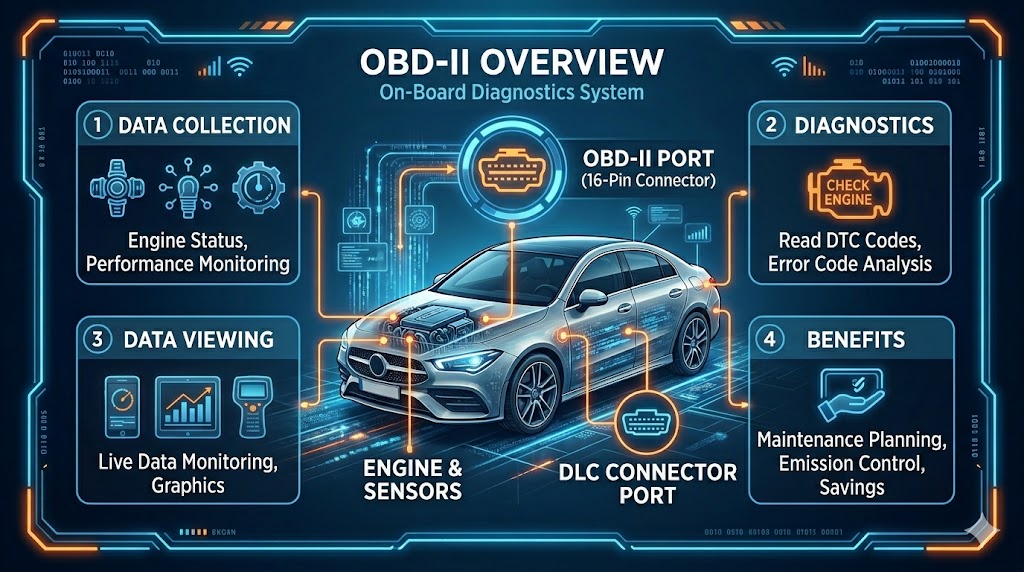
Connect an OBD-II diagnostic scanner to your vehicle's data port under the dash, navigate to the diagnostic trouble code menu, and select 'Erase' or 'Clear Codes.' Afterward, take the vehicle through a complete drive cycle to verify that the fault does not return.
