

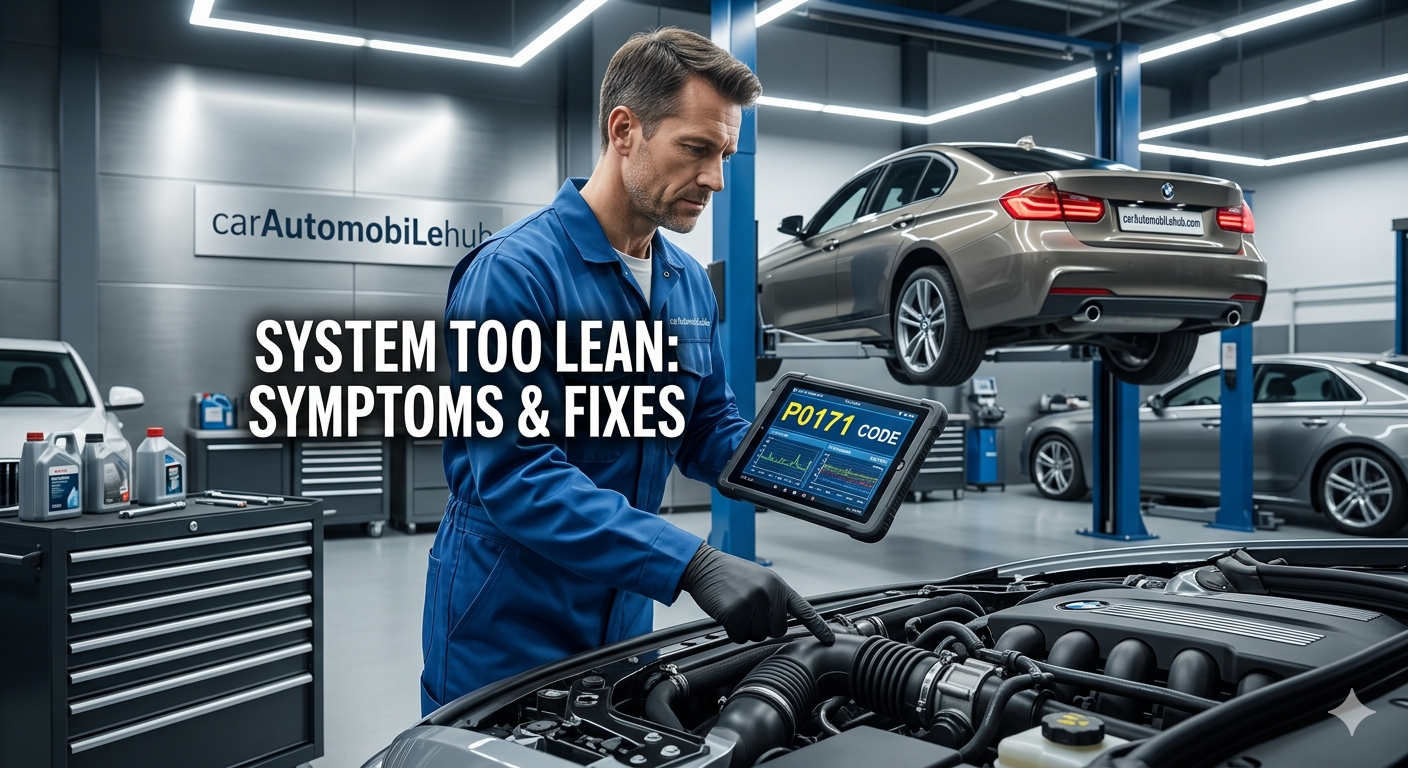
P0171 code represents one of the most common and persistent diagnostic trouble codes you can encounter on modern vehicles. Officially defined as “System Too Lean (Bank 1),” this warning indicates that your engine’s computer has detected an imbalance in the air-fuel mixture. Specifically, there is either too much air entering the combustion chambers or not enough fuel being delivered to match the incoming air. When this occurs, the engine operates in a lean state, which can degrade performance, increase emissions, and eventually cause severe internal engine damage if left unaddressed. Understanding the underlying mechanics of this code is essential for any vehicle owner or technician aiming to restore smooth operation.
- Definition: P0171 indicates a “System Too Lean” condition on Bank 1, meaning the air-to-fuel ratio has too much air or too little fuel.
- Primary Causes: Vacuum leaks, dirty or faulty Mass Airflow (MAF) sensors, weak fuel pumps, and clogged fuel filters.
- Key Symptoms: Rough idling, hesitation during acceleration, engine stalling, and decreased fuel efficiency.
- Urgency: Moderate to high; driving long distances with a lean mixture can cause overheating and damage the catalytic converter.
What Does System Too Lean Bank 1 Mean?
To understand why your vehicle’s computer triggered this code, it helps to understand how internal combustion engines manage fuel. For optimal combustion, efficiency, and emission control, gasoline engines aim for a specific chemical balance known as the stoichiometric ratio. This ratio is exactly 14.7 parts of air to 1 part of fuel. The Engine Control Module (ECM) constantly monitors this balance using input from various sensors, primarily the oxygen sensors located in the exhaust system and the Mass Airflow (MAF) sensor in the intake tract.
When the ECM detects that the oxygen levels in the exhaust are consistently too high, it realizes the mixture is running lean. “Bank 1” refers to the side of the engine that contains cylinder number one. On inline engines (like straight-fours or straight-sixes), there is only one bank, so any lean code will default to Bank 1. On V-type engines (like V6 or V8 configurations), Bank 1 is the cylinder bank containing the first cylinder in the firing order. If the computer is unable to add enough fuel to compensate for the excess air, it illuminates the check engine light and stores the P0171 code in its memory.
What Are the Most Common P0171 Code Symptoms?
An engine running lean does not behave normally. Depending on the severity of the air-fuel imbalance, you might experience a wide range of noticeable P0171 code symptoms. In some cases, the vehicle might drive relatively well with only a lit check engine light, while in other cases, the drivability issues can become a major safety hazard.
A highly prevalent issue is a P0171 rough idle. When the vehicle is stationary at a red light or idling in a driveway, the engine may shake, vibrate, or sound inconsistent. This occurs because a lean mixture is difficult to ignite consistently, leading to minor misfires that disrupt the engine’s smooth rhythm. You might also notice a severe lack of power when attempting to accelerate or pass other vehicles. The engine might hesitate, stumble, or even bog down momentarily when you press the gas pedal, as it lacks the thermal energy that a properly balanced fuel charge provides.
Stalling is another frequent symptom, especially when coming to a stop or when the engine is cold. When the engine is cold, it naturally requires a richer fuel mixture to run smoothly. If the fuel system cannot deliver this extra gasoline, the engine may die repeatedly until it warms up. Additionally, you might notice decreased fuel economy. While it might seem counterintuitive that a “lean” (fuel-starved) engine uses more fuel, the ECM actually attempts to correct the lean condition by dumping extra fuel into the cylinders. This constant compensation destroys your vehicle’s fuel efficiency.
What Causes a P0171 Code to Trigger?
Identifying the root cause of a system too lean bank 1 condition requires looking at both sides of the combustion equation: air delivery and fuel delivery. Any component that allows unmetered air into the engine or prevents the correct amount of fuel from reaching the cylinders can trigger this fault code.
Unmetered Air and Vacuum Leaks
A vacuum leak is perhaps the most frequent culprit behind a lean code. The MAF sensor measures the exact volume of air entering the intake system so the ECM can inject the matching amount of fuel. If air enters the engine after the MAF sensor, it is considered “unmetered” because the computer does not know it is there. Common vacuum leak symptoms include a high or erratic idle speed, a whistling or hissing noise from the engine bay, and a rough idle that improves slightly at higher engine speeds when the vacuum leak represents a smaller percentage of the total air intake. Cracked vacuum hoses, a leaking intake manifold gasket, a torn intake snorkel, or a failing PCV (Positive Crankcase Ventilation) valve are typical sources of these leaks.
Dirty or Faulty Mass Airflow (MAF) Sensor
The MAF sensor uses a heated wire or filament to measure incoming air. Over time, this delicate element can become coated with dust, oil from aftermarket air filters, or carbon blowback. When the sensor is dirty, it cannot accurately measure the air passing over it, usually under-reporting the air volume. The ECM, relying on this faulty data, injects too little fuel, resulting in a lean condition. Fortunately, mass airflow sensor cleaning is a simple and inexpensive process that often resolves the issue without requiring a costly replacement part.
Fuel Delivery Issues
If the air measurements are correct but the fuel system cannot deliver what is requested, a lean condition occurs. A weak or failing fuel pump may not be able to maintain the high pressure required by the fuel injectors. Similarly, a clogged fuel filter can restrict fuel flow, especially under load. Fuel injectors themselves can become partially clogged or restricted by carbon deposits, preventing them from atomizing and spraying the correct volume of fuel into the combustion chamber. Weak fuel delivery often manifests as a power loss at high speeds or under heavy acceleration, as the system fails to keep up with the engine’s high-demand state.
How to Fix P0171 Code Step-by-Step
Resolving this code does not have to be an overwhelming task. By following a systematic diagnostic procedure, you can pinpoint the exact failure point and avoid throwing unnecessary parts at your vehicle. Here is a practical, step-by-step troubleshooting guide to help you fix the issue safely.
Step 1: Read the Live Data and Fuel Trims
Connect an OBD-II scanner to your vehicle’s diagnostic port and look at the live data stream. Pay close attention to the Short-Term Fuel Trim (STFT) and Long-Term Fuel Trim (LTFT). Fuel trims represent the percentage of fuel the ECM is adding (positive numbers) or subtracting (negative numbers) to maintain the correct air-fuel ratio. If your LTFT is higher than positive 10% or 15%, the computer is actively trying to compensate for a lean condition. Observe these numbers at idle and then rev the engine to around 2,500 RPM. If the fuel trims drop significantly at higher RPMs, you are likely dealing with a vacuum leak. If the trims stay high or get worse at higher RPMs, you are likely facing a fuel delivery or MAF sensor issue.
Step 2: Inspect for Vacuum Leaks
Pop the hood and perform a thorough visual inspection of the engine bay. Look for any cracked, disconnected, or dry-rotted vacuum lines. Inspect the large plastic or rubber intake boot connecting the air filter box to the throttle body; look closely inside the accordion-style folds for hidden tears. If a visual inspection does not reveal the leak, you can use a professional smoke machine to inject smoke into the intake system. Any escaping smoke will immediately pinpoint the leak. Alternatively, you can carefully spray a small amount of soapy water or carburetor cleaner around suspect intake gaskets and vacuum lines while the engine is running. If the engine idle changes or smooths out momentarily, you have found the leak location.
Step 3: Clean the Mass Airflow Sensor
If you suspect the air measurements are incorrect, perform a mass airflow sensor cleaning. Locate the MAF sensor along the intake tube, unplug the electrical connector, and remove the sensor using the appropriate screwdriver. Using a dedicated MAF sensor cleaner spray, thoroughly spray the tiny wire elements inside the sensor. Never touch these wires with your fingers, cotton swabs, or any tools, as they are incredibly fragile and easily damaged. Allow the sensor to air dry completely for about 10 to 15 minutes before reinstalling it and reconnecting the wiring harness.
Step 4: Test the Fuel System Pressure
If vacuum leaks and the MAF sensor check out fine, it is time to inspect fuel delivery. Connect a fuel pressure gauge to the test port (Schrader valve) on your engine’s fuel rail. Start the engine and compare the reading on the gauge to the manufacturer’s specifications found in your vehicle’s service manual. If the pressure is below specification, inspect the fuel filter first, as a clogged filter is a cheap and easy fix. If the filter is clean or has been replaced recently, the fuel pump itself may be weak and require replacement.
Step 5: Check the PCV Valve and EGR System
A stuck-open PCV valve acts as a massive vacuum leak, pulling crankcase vapors and raw air directly into the intake manifold. Remove the PCV valve and shake it; it should make a distinct metallic rattling sound. If it does not rattle, or if it is clogged with thick oil sludge, replace it. Additionally, check the Exhaust Gas Recirculation (EGR) valve. If the EGR valve is stuck open at idle, it allows exhaust gases to dilute the air-fuel mixture, mimicking a lean condition and causing a severe rough idle.
Diagnostic Reference Table
The table below provides a quick reference guide to help you match specific diagnostic observations with their most likely causes and solutions.
| Diagnostic Observation | Most Likely Root Cause | Recommended Action Step |
|---|---|---|
| Fuel trims improve at high RPM | Vacuum leak (unmetered air) | Inspect vacuum hoses, intake boot, and manifold gaskets |
| Fuel trims worsen at high RPM | Weak fuel pump or clogged filter | Perform a fuel pressure test at the fuel rail |
| Low MAF reading in live data | Dirty or contaminated MAF sensor | Clean the sensor elements with MAF cleaner |
| Hissing sound from engine bay | Broken vacuum line or torn boot | Replace the damaged hose or intake boot |
| Misfires on multiple cylinders | Severe fuel starvation or large leak | Check fuel pressure and inspect PCV valve |
Can You Drive with a System Too Lean Bank 1 Code?
While a vehicle displaying a P0171 code might still run and drive, ignoring this issue for an extended period is highly discouraged. A lean air-fuel mixture burns much hotter than a properly balanced mixture. This elevated combustion temperature puts immense thermal stress on vital engine components. Over time, these high temperatures can warp exhaust valves, damage spark plugs, and even melt pistons in extreme scenarios.
Furthermore, the excess oxygen and unburned fuel entering the exhaust system put a heavy load on your catalytic converter. The catalytic converter will work overtime trying to burn off the excess emissions, which can cause it to overheat, melt internally, and clog. Replacing a catalytic converter is an expensive repair that can easily be avoided by addressing the lean condition early. For your safety and the longevity of your vehicle, it is best to diagnose and repair the code as soon as possible.
Resolving Your Lean Engine Issues
Dealing with a P0171 code can be frustrating, but with a logical diagnostic approach, it is a highly manageable issue to resolve. By starting with the simplest and cheapest potential causes, such as checking for vacuum leaks and cleaning the mass airflow sensor, you can save significant time and money. Always use high-quality replacement parts and take your time during the diagnostic process. Restoring the proper stoichiometric balance to your engine will not only turn off that annoying check engine light but will also bring back the smooth performance, reliable idling, and great fuel economy you expect from your vehicle.
Frequently Asked Questions
Can a dirty air filter cause a P0171 code?
While a dirty air filter restricts overall airflow, it rarely causes a P0171 code because the MAF sensor still measures the air that does get through. However, if the filter is extremely clogged or damaged, it can cause turbulence or allow dirt to contaminate the MAF sensor, leading to incorrect readings.
How much does it cost to fix a P0171 code?
The repair cost varies widely depending on the root cause. If the issue is a simple vacuum leak or a dirty sensor, you can often fix it yourself for under $20 using a can of cleaner or a new vacuum hose. However, if you need to replace a fuel pump or an intake manifold gasket, professional repair costs can range from $200 to $800.
Will a P0171 code clear itself after fixing the issue?
Yes, once the underlying issue is resolved, the ECM will eventually clear the code automatically after several successful drive cycles without detecting the lean condition. Alternatively, you can use an OBD-II scanner to manually clear the code and turn off the check engine light immediately.
Can a bad oxygen sensor trigger a P0171 code?
Yes, a faulty upstream oxygen (O2) sensor can falsely report high oxygen levels in the exhaust stream to the ECM. This causes the computer to believe the engine is running lean when it actually is not, triggering the trouble code despite the fuel system operating correctly.
What is the difference between P0171 and P0174?
Both codes indicate a system too lean condition, but P0171 refers specifically to Bank 1 of the engine. P0174 indicates that Bank 2 is running lean. If your vehicle triggers both codes simultaneously, the root cause is almost certainly a shared component, such as a vacuum leak in the main intake boot or a dirty MAF sensor.
