

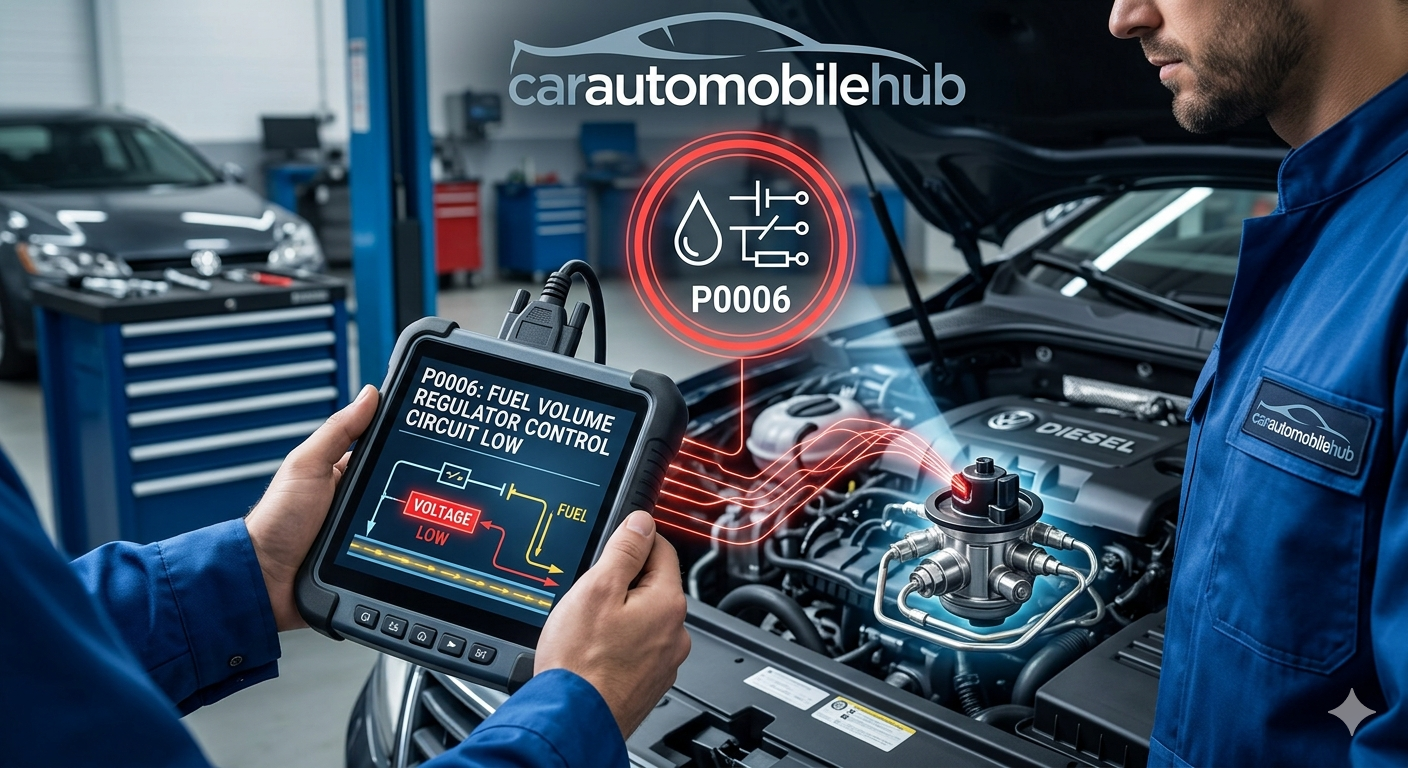
P0006 code is a diagnostic trouble code (DTC) that points to a specific issue within your vehicle’s fuel delivery system, specifically indicating a “Fuel Volume Regulator Control Circuit Low” condition. When the Powertrain Control Module (PCM) detects that the electrical signal sent to the fuel volume regulator valve is below the normal operating threshold, it triggers this specific trouble code and illuminates the check engine light. This fuel system error code is highly critical because fuel volume and pressure are essential for maintaining proper engine combustion and performance. Understanding what is code P0006, what causes it, and how to address it can save you from costly engine damage and unexpected breakdowns.
- Definition: The P0006 fault code indicates that the fuel volume regulator control circuit voltage is lower than expected.
- Primary Symptoms: Drivers typically experience a check engine light P0006, hard starting, engine hesitation, or stalling.
- Common Causes: Damaged wiring, a bad fuel volume regulator solenoid, or a failing PCM are the usual culprits.
- Urgency: Moderate to high. Prolonged driving with low fuel pressure can cause severe drivability issues and lean engine conditions.
Understanding the P0006 Code Meaning and System Function
The P0006 OBD2 code is a generic powertrain diagnostic code that applies to many modern vehicles, particularly those equipped with common rail diesel engines or gasoline direct injection (GDI) systems. The fuel volume regulator (FVR) is an electronic solenoid controlled by the PCM to manage the amount of fuel entering the high-pressure fuel pump. When the PCM commands the regulator to adjust fuel volume but receives a voltage signal that is lower than the minimum calibrated limit, the P0006 engine code is stored in the system’s memory.
In high-pressure fuel systems, precise control over fuel volume is critical. Unlike older systems that relied solely on a mechanical fuel pressure regulator valve, modern vehicles use electronic control to dynamically adjust fuel delivery based on engine load, speed, and throttle position. If the circuit voltage drops too low—often due to a short to ground or excessive resistance—the regulator cannot function properly, leading to a low fuel pressure code scenario that disrupts the air-fuel ratio.
Common P0006 Code Symptoms to Watch For
When your vehicle triggers a P0006 fault code, the symptoms can range from subtle performance changes to severe drivability issues. Because the fuel volume regulator is unable to accurately control fuel delivery, the engine may suffer from starvation or erratic pressure spikes. Below are the most common symptoms associated with this fuel system error code:
- Check Engine Light: The most immediate indicator is the illumination of the check engine light P0006 on your dashboard.
- Engine Hesitation and Sagging: You may notice a lag in acceleration, especially when trying to merge onto highways or climb steep hills.
- Hard Starts or No-Start Conditions: Low fuel volume makes it difficult for the high-pressure fuel pump to build up the necessary pressure to start the engine.
- Engine Stalling: The engine may stall or die unexpectedly while idling or driving at low speeds due to insufficient fuel delivery.
- Reduced Fuel Economy: A malfunctioning fuel volume regulator can cause the engine to run inefficiently, leading to increased fuel consumption.
What Causes a P0006 Fault Code?
To successfully resolve a P0006 OBD2 code, you must pinpoint the root cause of the low voltage signal in the control circuit. This electrical issue can stem from several components within the fuel delivery and control systems. Let’s look at the primary triggers for this error code:
| Potential Cause | Description | Severity Level |
|---|---|---|
| Damaged Wiring or Connectors | Frayed, corroded, or shorted wires in the fuel volume regulator circuit. | Moderate |
| Bad Fuel Volume Regulator | The solenoid valve itself is shorted internally, causing a low-voltage reading. | High |
| Corroded Electrical Connections | Moisture or dirt in the harness connector creating high resistance. | Low to Moderate |
| PCM Software or Hardware Issue | A rare but possible failure where the computer cannot accurately read the circuit. | Critical |
In most cases, a bad fuel volume regulator or physical damage to the wiring harness leading to the regulator solenoid is the primary culprit behind the P0006 engine code. Road debris, engine heat, and vibration can cause the delicate wires to rub against metal components, resulting in a short circuit to ground.
Step-by-Step P0006 Diagnosis Guide
Diagnosing fuel system error codes requires a systematic approach. Before rushing into a fuel volume regulator replacement, you should perform a series of tests to confirm the source of the electrical fault. Follow these diagnostic steps to narrow down the issue:
- Perform a Visual Inspection: Carefully examine the wiring harness and connector leading to the fuel volume regulator. Look for any signs of melted insulation, broken wires, or corrosion inside the connector pins. Clean any dirty connections with electrical contact cleaner.
- Check Battery Voltage: Ensure your vehicle’s battery is fully charged and the charging system is functioning correctly, as low system voltage can sometimes trigger false DTCs.
- Measure Solenoid Resistance: Disconnect the electrical connector from the fuel volume regulator. Using a digital multimeter (DMM) set to ohms, measure the resistance across the regulator’s terminals. Compare your readings to the manufacturer’s specifications. An open circuit (infinite resistance) or a reading close to zero indicates an internal short.
- Test Circuit Voltage: With the ignition key in the “On” position (engine off), check for reference voltage at the harness connector. If the voltage is significantly lower than specified (typically 5V or 12V depending on the vehicle), there is an issue with the wiring between the PCM and the connector.
- Inspect High-Pressure Pump: Since this is closely linked to a high pressure fuel pump code, check the overall fuel rail pressure using a scan tool to see if the pump is physically capable of building pressure.
How to Fix P0006: Proven Repair Methods
Once you have completed your P0006 diagnosis, you can proceed with the appropriate P0006 repair. Depending on your findings, one of the following methods will resolve the issue and allow you to clear the P0006 code permanently:
Repairing or Replacing the Wiring Harness
If your diagnostic tests revealed damaged, frayed, or corroded wiring, repairing the affected section is the best course of action. Cut out the damaged portion of the wire, solder in a new wire of the same gauge, and seal it with heat-shrink tubing to protect it from moisture. If the connector itself is corroded or melted, replace the connector pigtail.
Executing a Fuel Volume Regulator Replacement
If the resistance tests confirm a bad fuel volume regulator, you must replace the valve. In many modern vehicles, the fuel volume regulator solenoid is integrated into the high-pressure fuel pump assembly, while in others, it can be replaced as an individual component. Ensure the fuel system pressure is safely relieved before removing the old regulator, install the new component with fresh seals, and torque it to the manufacturer’s specifications.
Clearing the Code and Road Testing
After completing the physical repairs, connect your OBD2 scanner to the vehicle’s diagnostic port. Select the option to clear P0006 code and any associated fuel system error codes. Start the engine and perform a test drive under various driving conditions to ensure the check engine light P0006 does not return and the fuel system operates smoothly.
Conclusion: Resolving the Fuel Volume Regulator Control Circuit Low Issue
The P0006 code is a serious indicator that your vehicle’s engine management system is struggling to control fuel volume. While the prospect of dealing with a fuel volume regulator control circuit low error can be daunting, a structured approach to diagnosis and repair will help you resolve the problem efficiently. By checking the wiring harness, testing the regulator solenoid resistance, and replacing faulty components, you can restore your vehicle’s performance and ensure a reliable, safe driving experience. Don’t ignore this warning sign; addressing a P0006 code early prevents further wear on your high-pressure fuel pump and keeps your engine running at peak efficiency.
Frequently Asked Questions
What is code P0006?
The P0006 code is a diagnostic trouble code indicating that the fuel volume regulator control circuit has a low-voltage condition. This means the engine control module is detecting a signal voltage from the regulator that is lower than the manufacturer's specified range.
Can I drive with a P0006 code?
It is not recommended to drive long distances with a P0006 fault code. Since this issue directly impacts fuel delivery, your vehicle may suffer from severe hesitation, stalling, or sudden power loss, which can pose a safety hazard on the road.
How do I clear the P0006 code?
To clear the P0006 code, you must first diagnose and repair the underlying issue, such as fixing damaged wiring or completing a fuel volume regulator replacement. Once repaired, connect an OBD2 scanner to your car's OBD port and select the option to clear the diagnostic trouble codes.
What is the difference between a fuel volume regulator and a fuel pressure regulator?
A fuel volume regulator controls the quantity of fuel entering the high-pressure fuel pump, whereas a traditional fuel pressure regulator valve manages the pressure of the fuel already in the fuel rail by bleeding off excess fuel back to the tank.
How much does it cost to fix a P0006 engine code?
The cost to fix a P0006 engine code varies depending on the root cause. If it is a simple wiring repair, it may cost under $100, but if you require a full fuel volume regulator replacement or high-pressure fuel pump service, costs can range from $300 to $1,000.
