

P0306 Cylinder 6 Misfire Detected, A P0306 Cylinder 6 Misfire Detected trouble code means your vehicle’s engine control module (ECM or PCM) has calculated that the sixth cylinder is failing to contribute its share of rotational energy to the crankshaft. When an engine cylinder fails to ignite its air-fuel mixture, the crankshaft momentarily slows down instead of accelerating through that combustion stroke. Modern engine management systems track these microscopic variations in crank rotational speed through the high-resolution crankshaft position sensor; if erratic speed fluctuations occur on Cylinder 6 for roughly 2 percent or more of firing events, the computer logs diagnostic trouble code P0306 and triggers the check engine light.
Key Takeaways
- Code P0306 points specifically to a combustion failure on Cylinder 6, driven by a loss of spark, fuel imbalance, mechanical compression drop, or localized air leak.
- A flashing check engine light indicates active raw fuel dumping into the exhaust, which can melt your catalytic converter substrate within minutes.
- Locating Cylinder 6 requires verifying your specific engine architecture (Inline-6, longitudinal V6/V8, or transverse FWD V6) before removing components.
- The fastest, zero-cost diagnostic move is the ignition coil swap test, which isolates whether the failure is electrical or mechanical in under thirty minutes.
What Does Code P0306 Mean?
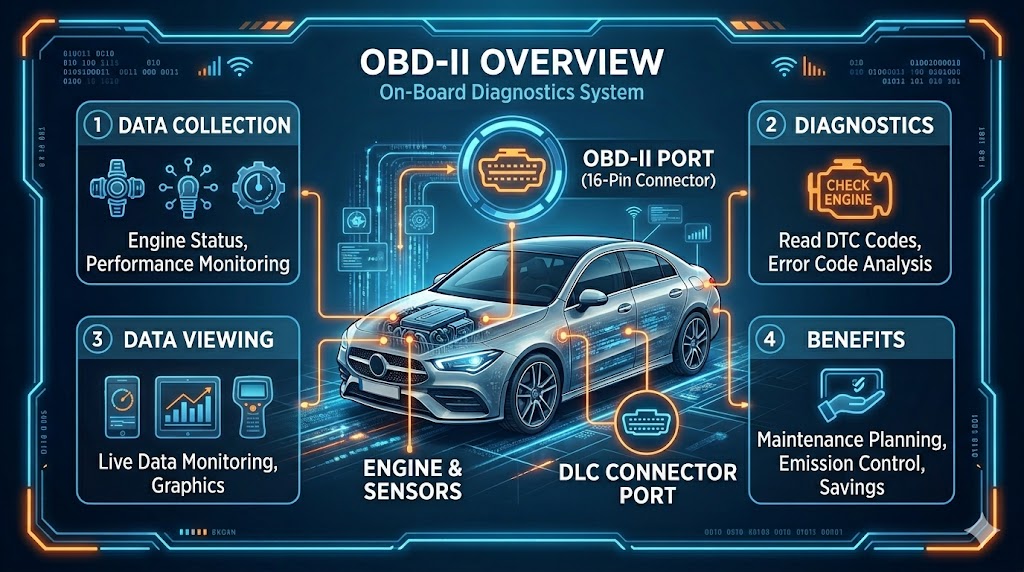
Every internal combustion engine relies on balanced, rhythmic combustion cycles to turn reciprocating piston motion into continuous rotational torque. Within standard Engine diagnostic codes: Your Complete Guide to OBD2 systems, misfire codes follow a strict numeric taxonomy. Generic misfires fall under P0300 Code: Causes, Symptoms & How to Fix It Fast, whereas codes ending in a specific number designate the exact cylinder at fault—similar to how P0301 Code: Causes, Symptoms & How to Fix It targets cylinder 1.
When code P0306 sets, the powertrain control module tracks the reluctor wheel attached to the crankshaft. Under healthy conditions, every firing event delivers a predictable push that accelerates the wheel past the magnetic or Hall-effect sensor tip. If Cylinder 6 experiences an incomplete burn or no burn at all, the engine’s angular momentum stumbles. The computer monitors this over 200-revolution windows (for severe, emissions-threatening misfires) and 1,000-revolution windows (for persistent, tailpipe-polluting misfires). A single dropped event will not trigger a code; persistent rotational lag exceeding the calibrated threshold ensures the diagnostic trouble code is recorded in memory.
Recognizing Cylinder 6 Misfire Symptoms
Misfires rarely go unnoticed from behind the wheel. Depending on your engine layout, load, and the underlying failure mechanism, cylinder 6 misfire symptoms can range from an intermittent shudder at red lights to severe drivetrain shuddering under load.
The most telling symptoms include:
- Check Engine Light Behavior: A steady yellow or amber light signifies an emissions-affecting misfire. A flashing or blinking light indicates an active, severe misfire where unburned gasoline is pouring directly into the exhaust manifold, creating an immediate fire hazard for your catalytic converter.
- Rough Idle and Drivetrain Vibration: Because one cylinder out of six or eight is completely absent from the rotational sequence, harmonic balance is lost. The engine shivers, and you will feel tactile vibrations through the steering wheel, seat frames, and floorboards while stopped in gear.
- Hesitation and Sluggish Acceleration: Demanding power while merging onto a highway requires all cylinders to fire under rising cylinder pressures. Cylinder 6 will fail to push its piston downward, creating a pronounced hesitation, bucking, or “dead spot” in throttle response.
- Fuel Odor and Diminished Fuel Mileage: When the spark plug fails to ignite the chamber, the unspent air-fuel charge is pushed out through the exhaust valves. You may smell raw fuel outside the vehicle, and your onboard trip computer will show a steep drop in miles per gallon as the ECM adds fuel trim to compensate for false lean readings.
- Hard Starting or Stalling: While a single dead cylinder rarely prevents an engine from starting, an erratic idle speed can cause cold stalls, especially when accessories like air conditioning or power steering draw power at idle.
P0306 Code Causes: The Three Pillars of Combustion
A cylinder needs three synchronized elements to produce power: a strong, properly timed spark; the correct mixture of atomized fuel and air; and adequate mechanical compression to contain the explosion. A failure in any of these three pillars creates P0306 code causes.
1. Ignition System Breakdown
Ignition failure remains the most frequent culprit behind a solitary cylinder misfire. Modern engines utilize Coil-on-Plug (COP) or Coil-near-Plug systems. Over time, the internal windings of the ignition coil experience thermal fatigue from engine bay heat, developing micro-cracks that break down insulation. When the coil breaks down, the voltage arcs internally or leaks through a dried, carbon-tracked rubber boot rather than jumping the spark plug electrode gap.
Spark plugs themselves are consumable wear items. Erosion of center and ground electrodes widens the gap beyond the coil’s ability to ionize the air under load. Heavy carbon fouling from oil blow-by or rich fuel delivery will ground out the spark before it can bridge the electrode.
2. Fuel Delivery Complications
If the spark is healthy, the fuel injector for Cylinder 6 may be failing. A clogged injector pintle restricts the spray pattern, starving the cylinder of atomized gasoline. Conversely, a stuck-open injector floods the chamber with liquid fuel, dousing the spark plug and making combustion impossible.
Electrical issues also manifest here: broken wiring harness clips, corrosion at the injector terminal, or broken driver circuits inside the PCM will prevent the injector solenoid from lifting. If the fuel mixture is compromised across an entire engine bank, you might also pull secondary codes alongside misfires, such as P0171 Code: Step-by, which indicates an excessively lean operating condition.
3. Loss of Mechanical Compression & Air Infiltration
When ignition and fueling check out fine, the cylinder likely has lost physical sealing. If mechanical compression leaks out before the spark plug fires, combustion cannot generate meaningful pressure. This can occur due to:
- A burnt or chipped exhaust valve that fails to seat against the cylinder head face.
- A failed head gasket fire ring, allowing compression to escape into an adjacent cooling passage or neighboring cylinder.
- Fatigued or broken valve springs that cause valve float or prevent full closure.
- Worn or stuck piston rings, allowing pressure to blow down into the crankcase.
- Worn camshaft lobes, which prevent the intake or exhaust valves from lifting sufficiently.
An isolated intake manifold vacuum leak directly at the runner for Cylinder 6 can also dilute the incoming fuel charge with unmetered air, making the cylinder too lean to ignite at idle speeds.
Where Is Cylinder 6 Located?
Finding Cylinder 6 is not straightforward because cylinder numbering depends entirely on the engine manufacturer and configuration. Guessing which cylinder is number six often leads to replacing perfectly functional parts on the wrong side of the vehicle.
Inline-6 Engines
On vehicles equipped with an inline-six (such as classic Jeep 4.0L engines, modern BMW turbocharged straight-sixes, or Cummins diesel platforms), cylinder layout is purely chronological. Cylinder 1 sits at the very front of the vehicle closest to the radiator and serpentine belt, while Cylinder 6 is located at the very rear, directly adjacent to the firewall. This layout makes identification simple.
V6 and V8 Longitudinal Engines (Rear-Wheel Drive & 4WD)
In rear-wheel drive trucks, SUVs, and performance sedans, engines sit longitudinally. To find Cylinder 6, you must first determine which cylinder bank contains Cylinder 1:
- Ford & GM: Ford typically numbers their V6 and V8 engines sequentially along banks. On a Ford V6, Bank 1 (passenger side) houses cylinders 1, 2, and 3; Bank 2 (driver side) houses cylinders 4, 5, and 6. Therefore, Cylinder 6 is the rear-most cylinder on the driver’s side. General Motors, by contrast, frequently alternates numbering by bank (Cylinders 1-3-5 on the driver side, 2-4-6 on the passenger side). On a GM engine using this pattern, Cylinder 6 is the rear-most cylinder on the passenger side.
- Chrysler/Dodge/Jeep: Modern Pentastar 3.6L V6 engines locate Bank 1 on the passenger side (Cylinders 1-3-5) and Bank 2 on the driver side (Cylinders 2-4-6). Cylinder 6 sits at the rear of Bank 2, closest to the driver’s firewall.
Transverse V6 Engines (Front-Wheel Drive)
Front-wheel drive crossover platforms and sedans orient the engine horizontally. The “front” of the engine (serpentine belt end) faces the passenger fender, while the transmission faces the driver side. In these configurations, Bank 1 is almost universally the rear cylinder bank tucked against the cabin firewall, while Bank 2 faces the front bumper radiator area. Depending on whether your brand runs sequential or odd/even cylinder numbers, Cylinder 6 could either be nestled awkwardly under the upper intake plenum against the firewall or right in front along the radiator support. Always confirm cylinder identification using your engine’s specific casting markings or a factory service manual before pulling plugs.
How to Fix Cylinder 6 Misfire: Step-by-Step Diagnostic Workflow
To avoid spending money on components your car does not need, follow this structured, cost-effective process of elimination. This approach isolates whether the fault is electrical, fuel-related, or purely mechanical.
Step 1: Perform a Comprehensive DTC Scan
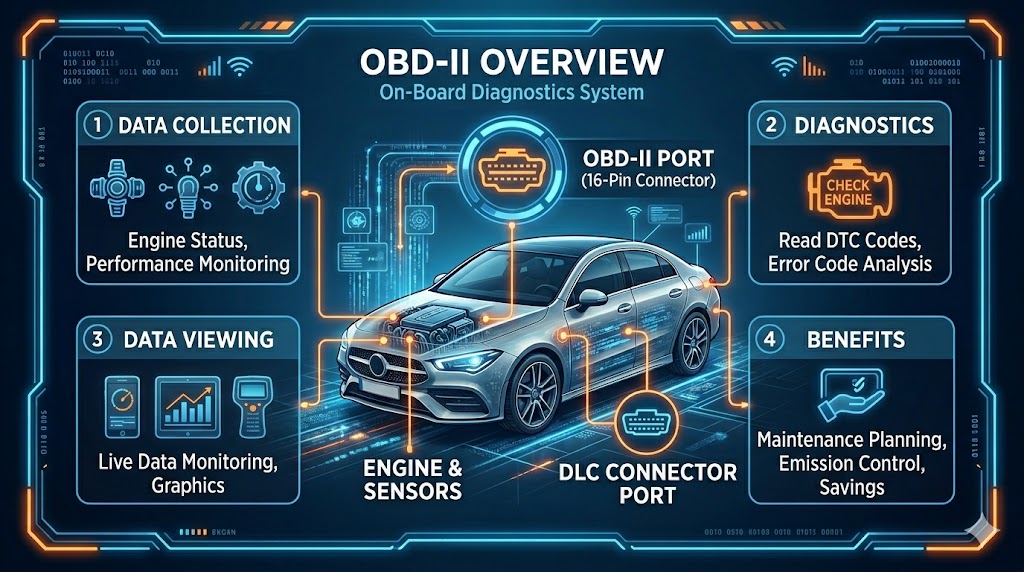
Connect an OBD-II scanner and read both active and pending trouble codes. Take note of accompanying DTCs. Are there injector circuit codes (such as P0206)? Are there bank-specific oxygen sensor codes, catalytic efficiency flags like P0420 Code: 5 Ways to Fix Your Catalytic Converter Issues, or multi-cylinder misfires? If you see lean codes along Bank 2, an intake manifold gasket leak may be the root cause rather than a single component breakdown.
Step 2: The Ignition Coil Swap Test
This is the most reliable zero-cost test for any modern Coil-on-Plug engine. Locate Cylinder 6 and an easily accessible companion cylinder (for example, Cylinder 2):
- Disconnect the negative battery terminal for safety.
- Unclip the electrical harness connector on Coil #6 and Coil #2.
- Remove the retaining bolts holding each coil in place.
- Swap Coil #6 over to Cylinder #2, and place Coil #2 into Cylinder #6.
- Torque the retaining bolts down, reconnect the wiring harnesses, and reconnect the battery.
- Clear the trouble codes using your scan tool.
- Start the engine and test drive under the conditions where the misfire previously occurred.
Re-scan the vehicle. If the new fault code reads P0302, the misfire moved with the coil. This confirms the ignition coil has failed and requires replacement. If the misfire remains stubbornly on Cylinder 6 (P0306), the coil is fully functional, pointing to the spark plug, fuel injector, or mechanical components.
Step 3: Spark Plug Inspection and Reading
Remove the spark plug from Cylinder 6 for a close visual inspection. Use a dedicated spark plug socket with a rubber insert or magnetic collar to protect the porcelain insulator.
Inspect the tip carefully:
- Dry, black carbon deposits: Indicates an overly rich fuel condition or weak ignition spark that fails to cleanly burn the mixture.
- Wet, fuel-soaked plug: Indicates a complete lack of spark or a stuck-open fuel injector drowning the chamber.
- Ash or glossy oil deposits: Points to oil intrusion past degraded valve stem seals or worn piston oil control rings.
- Blistered, white porcelain or melted ground strap: Warns of severe pre-ignition, extreme cylinder overheating, or an ultra-lean condition.
Use a feeler gauge to measure the electrode gap against factory specifications (typically between 0.028 and 0.044 inches depending on turbocharging and ignition design). If the plug is worn or fouled, replace the set. If you are troubleshooting without new parts on hand, swap the spark plug to another cylinder just as you did with the coil to see if the misfire migrates.
Step 4: Fuel Injector Operational Testing
If the ignition components check out, shift your focus to fuel delivery. With the engine idling, place the metal tip of an automotive stethoscope—or a long, solid screwdriver—firmly against the plastic body of Fuel Injector 6. Place your ear against the handle. You should hear a sharp, metallic clicking sound occurring in rapid cadence with engine RPM. A muted, irregular, or silent response indicates a mechanically stuck or non-energized injector.
Next, shut off the engine and disconnect the injector harness. Using a digital multimeter set to resistance (ohms), measure across the two male pins inside the injector terminal. Most high-impedance automotive injectors read between 11 and 16 ohms at ambient temperature. Compare your measurement on Cylinder 6 directly against neighboring injectors; a reading of infinite resistance (open circuit) or zero resistance (internal short) confirms a dead injector solenoid.
Step 5: Cylinder 6 Compression and Leak-Down Testing
If spark and fuel are present, confirm the mechanical health of the cylinder before considering engine control modules or wiring harnesses. A cylinder 6 compression test reveals whether the piston and valves can seal under pressure.
Disable the fuel pump by pulling its fuse or relay, then remove all spark plugs to allow the starter to crank freely. Thread a compression gauge hose securely into the Cylinder 6 spark plug port. Depress the accelerator pedal to wide-open throttle (WOT) to ensure unrestricted air intake, and crank the engine through 4 to 6 compression strokes until the gauge needle peaks. Record the reading and repeat across all cylinders.
A healthy engine displays two traits: absolute pressure within factory limits (typically 140 to 180 PSI on naturally aspirated engines) and consistency across all cylinders. Any cylinder reading more than 10 to 15 percent below the average of the remaining cylinders indicates mechanical damage. If Cylinder 6 reads low (for instance, 75 PSI while other cylinders read 150 PSI), squirt a teaspoon of clean motor oil into the spark plug hole and retest. If compression rises significantly, the piston rings are worn or stuck. If compression stays low, a valve is burnt or the cylinder head gasket has ruptured.
P0306 Repair Cost Breakdown
The financial impact of resolving a P0306 code depends entirely on the root cause. A basic DIY ignition swap can fix the problem for the cost of a single part, while major internal engine damage demands substantial shop labor.
| Faulty Component / Repair Task | DIY Parts Cost | Professional Repair Cost (Parts + Labor) |
|---|---|---|
| Spark Plug Replacement (Set) | $20 – $80 | $120 – $280 |
| Ignition Coil Replacement (Single) | $35 – $110 | $150 – $320 |
| Fuel Injector Replacement | $60 – $180 | $250 – $550 |
| Upper Intake Manifold Gaskets | $25 – $60 | $250 – $450 |
| Valve Cover Gasket (Spark Plug Tube Seals) | $20 – $50 | $180 – $380 |
| Cylinder Head Gasket Replacement | $120 – $300 | $1,500 – $2,800 |
| Engine Valve Job / Cylinder Head Rebuild | $350 – $700 | $2,000 – $3,600 |
Can I Drive with a P0306 Code?
Whether you can drive depends heavily on how the check engine light behaves and how the engine feels under load. If the light remains steady, the engine runs reasonably smooth, and you need to drive a short distance home or to a repair shop, you can typically do so at moderate speeds with gentle throttle input. However, prolonged driving with an active misfire washes protective engine oil off the cylinder walls with unburned gasoline, accelerating piston ring wear and diluting your motor oil.
If the check engine light flashes, you must pull over and shut the vehicle down immediately. A blinking light warns that unburned fuel is entering the exhaust stream at volume. The catalytic converter relies on rare metals to oxidize leftover emissions; when flooded with raw gasoline and oxygen, internal temperatures quickly climb past 1,800 degrees Fahrenheit. At these temperatures, the ceramic honeycomb core inside the converter will melt, shatter, and block exhaust flow, transforming a basic ignition fix into an expensive exhaust replacement.
Conclusion
Troubleshooting a P0306 Cylinder 6 Misfire Detected code does not require swapping out parts at random. By following a structured process of elimination—swapping ignition coils, inspecting spark plugs, checking injector resistance, and confirming mechanical compression—you can isolate the root cause quickly and accurately. Address the code early to protect your catalytic converter and keep your engine running smoothly for years to come.
Frequently Asked Questions
Can I safely drive with a P0306 code?
You can drive a short distance at low speeds if the check engine light is solid and the car does not shake violently. However, if the light is flashing, stop driving immediately to prevent unburned fuel from overheating and melting your catalytic converter.
What causes a Cylinder 6 misfire only at idle?
A misfire restricted strictly to idle speeds is typically caused by a vacuum leak at the Cylinder 6 intake manifold runner or a dirty fuel injector that fails to atomize properly at low fuel pressure. Mechanical valve sealing issues like slight valve leakage can also show up more prominently at idle because the engine has more time per stroke to lose compression.
What causes a Cylinder 6 misfire only under hard acceleration?
Misfires under load point directly toward weak ignition components. Higher cylinder pressures make it much harder for an electrical spark to jump the plug gap, causing marginal ignition coils, worn spark plugs, or cracked rubber boots to misfire only when you depress the throttle firmly.
Will a bad catalytic converter cause code P0306?
A plugged catalytic converter usually causes global performance issues and random misfire codes across an entire cylinder bank (like P0300) rather than an isolated misfire on Cylinder 6 alone. However, an unresolved P0306 misfire will quickly destroy an otherwise healthy catalytic converter.
How do I know if my P0306 code is caused by low compression?
If you swap both the ignition coil and spark plug to another cylinder and the misfire remains on Cylinder 6, perform a mechanical compression test using an automotive pressure gauge. A reading on Cylinder 6 that is more than 10 to 15 percent lower than the other cylinders confirms mechanical compression loss.
